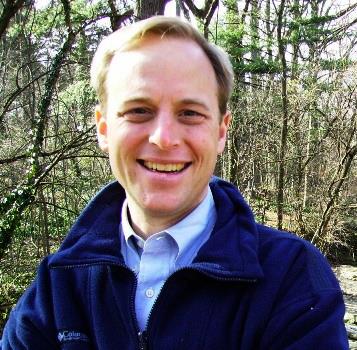
As we wrap up blogs for Artist Awareness Month, we welcome Adam Levner, Executive Director of Critical Exposure to 7 Questions. Critical Exposure trains youth to use photography and advocacy to make real change in their schools and communities. Previously, Adam worked as a fifth grade teacher and then as a community organizer with Stand for Children, where he led successful reform efforts that resulted in over $20 million annually in additional revenue for Prince George’s County, MD school district.
Category Archives: 7 Questions
7 Questions with Christie Walser: Executive Director of Project Create
August is Artist Appreciation Month and among our 52 of art-related nonprofits we welcome Christie Walser of Project Create to 7 questions. Christie joined Project Create as Executive Director in January, 2011, bringing with her nearly two decades of nonprofit administration experience, a passionate commitment to child advocacy, and a long-time avocation as a community-theater actor, director and producer. Project Create provides accessible arts education to promote positive development in children, youth, and families experiencing homelessness and poverty.
Continue reading
7 Questions with Hedrick Belin, President of Potomac Conservancy
July is Parks and Recreation Awareness month and today we welcome Hedrick Belin, President of Potomac Conservancy to 7 Questions!Potomac Conservancy is the region’s leading clean water advocate, fighting to ensure the Potomac River boasts clean drinking water, healthy lands, and connected communities. Under his leadership, the Conservancy has launched several successful initiatives to promote river-friendly land use and to expand the base of volunteers actively engaged in the stewardship of our local green spaces.
7 Questions with Andrew Barnett, Executive Director of SMYAL
June is Pride Month and today we welcome Andrew Barnett, Executive Director of SMYAL (Supporting and Mentoring Youth Advocates and Leaders) to 7 Questions! SMYAL supports and empowers lesbian, gay, bisexual, transgender and questioning (LGBTQ) youth in the Washington, DC metropolitan region through youth leadership development, community service, and advocacy. While working at SMYAL over the past 9 years, Andrew served on the Mayor’s Bullying Prevention Task Force, worked diligently to strengthen in-school GSAs (Gay-Straight Alliance), and developed SMYAL into an influential organization.
1. What motivated you to begin working with your organization?
I first became involved in advocating for lesbian, gay, bisexual, transgender and questioning (LGBTQ) youth when I co-founded a Gay-Straight Alliance (GSA) as a senior in high school. When I graduated college, I knew that I wanted to get more involved in the LGBT movement and I moved to DC to find a way to do that, which led me to an internship at SMYAL. One of the aspects of SMYAL’s work that drew me in was the organization’s focus on addressing intersectional issues. The majority of the youth we serve are African-American and low-income, and so face challenges due not only to their sexual orientation or gender identity but also due to institutionalized racism and economic factors. I greatly valued (and still do!) the way in which SMYAL’s programs incorporated an understanding of how different systems of oppressions impact youth’s lives. As my internship was winding down, a staff position opened up, and I joined the team.
2. What exciting change or innovation is on your mind?
Last year, we teamed up with a California-based organization, GSA Network, to launch a major new initiative: the DC Regional GSA Network. This new effort focuses on empowering LGBTQ youth leaders to organize and promote positive change in their schools and communities through GSA clubs. The program has challenged us to shift our thinking in two major ways: (1) incorporating youth leaders into the program at all levels, including program facilitation, and (2) using a network-based model in which we are not only creating a safe space for LGBTQ youth to be who they are but also working with youth to create affirming spaces wherever they are. As an Executive Director, it’s been exciting to see our youth develop and articulate their own visions for the program, their schools, and their communities.
3. Who inspires you (in the philanthropy world or otherwise)? Do you have a hero?
There are many people who inspire me and whom I admire. In the landscape of LGBT youth organizations, I am particularly inspired by Carolyn Laub, the Executive Director of GSA Network, and Grace Sterling Stowell, the Executive Director of the Boston Alliance of GLBT Youth (BAGLY). I am also a huge admirer of the work of Dr. Caitlin Ryan and the Family Acceptance Project at San Francisco State University.
In addition, what sustains me day to day is the inspiration I take from the people I work with–the SMYAL Board, staff, volunteers, and, most importantly, our LGBTQ youth. I consider myself so fortunate to work with amazing, talented people who are so passionate about the work that we do.
4. What was your most interesting recent project/partnership?
For the past two years, SMYAL has been a member of the Mayor’s Bullying Prevention Task Force here in DC. The Task Force was charged with developing of a model bullying prevention policy and then assisting with its implementation in our schools and other youth-serving providers. I have been so impressed with the way in which the DC Office of Human Rights has spearheaded this effort through engaging a diverse pool of stakeholders (ranging from folks who work at DC Department of Parks and Recreation to the Washington Metropolitan Area Transit Authority) while also keeping us on task and ensuring we adhered to the timetable for speedy implementation. I believe that the model bullying prevention policy that the District adopted is very strong and the ways in which the work is being coordinated across the city will serve as a model for other cities in the future.
5. What is the single greatest challenge that your organization faces (besides finances) and how are you dealing with this challenge?
The greatest challenge we face is probably similar to many other community-based nonprofits, which is that there is always more need than resources. We strive to be strategic in how we develop programs and focus our time in order to ensure that we are able to maximize our impact. Unfortunately, this means that we cannot be everything to everyone and that sometimes we have to say no to opportunities for collaboration and partnership because we just don’t have the bandwidth to take on a new initiative.
6. What advice do you have for other people in your position?
When I first became Executive Director of SMYAL, I took a class at the Center for Nonprofit Advancement for new EDs. The instructor hung a banner at the front of the classroom each session which said, It’s all about relationships. I have reflected back on that banner over the years and I have to say I think it is true–as EDs, the relationships we build with our Board members, staff members, community stakeholders, and constituents are central to our ability to do our jobs. Another piece of advice I would offer is never to be afraid to ask for help when you need it.
7. What’s next/coming up for you or your organization?
This year is an exciting one for SMYAL–we are celebrating our 30th Anniversary! To commemorate this milestone, we have been recording the history of SMYAL through our alums–former youth participants, Board members, volunteers, and staff. We just released a publication, 30 Years of SMYAL Stories, that collects several of these interviews and will be putting out a podcast later in the year. Programmatically, we are continuing to build our DC Regional GSA Network and preparing for the second school year of implementation.
A major change for me is that I will be stepping down from SMYAL in August to pursue a Ph.D. in clinical psychology at the George Washington University. It is certainly bittersweet, as I will be very sad to leave this organization that has meant so much to me since I joined the staff 9 years ago. However, I am excited to see how SMYAL continues to grow in the years to come. The Board is in the midst of a search for the next Executive Director, so I would encourage anyone who is interested to apply!
Spotlight: Mentors, Inc.
Today we welcome Deirdre Bagley, Executive Director of Mentors, Inc. to Good Works, to congratulate them on their 2013 award from the Washington Post Charities, a fund of the McCormick Foundation! Deirdre has been at Mentors, Inc. for about five years, with a volunteer history in youth leadership and literacy programming, and a professional history with a variety of nonprofit associations from higher education to environmental advocacy. Deirdre is at home with teen mentoring, combining her nonprofit leadership experience and personal mission interest.
1. What motivated you to begin working with Mentors, Inc? What need does it fulfill and how are you (and your organization) working towards meeting it?
I reached a point in my professional career where I felt driven to combine my professional leadership with my personal interest in working with youth, and find an organization that was well respected for their work. That led me to Mentors, Inc., which helps Washington, D.C. high school teens graduate from high school to combat the abysmal drop-out rates locally. We pair teens with a mentor to help expand their universe — internally and externally — to see and pursue what’s possible for their lives.
2. What exciting change or innovation is on your mind?
Partnerships that really work and truly enhance all partners’ capacity! We’ve begun working with the United Way and City Year at the Kelly Miller Middle School on an 8th to 9th grade transition project to improve 8th graders’ success with their new high school experience, to prevent them from joining the ranks of teens who drop out in 9th grade. City Year was already in the school with strong student, administration, and family relationships; the United Way was bringing corporate partners in as volunteer mentors, and we manage mentoring intake, matching, and support. We’re looking forward to following how these young teens do when they make the transition. Because all partners are doing what they do best and not duplicating others’ work, the project has great potential for replication.
3. Who inspires you (in the philanthropy world or otherwise)? Do you have a hero?
I don’t have heroes, but there are people who live their lives in ways I admire. Our teenagers inspire me. They persist and dream on, in spite of living in high poverty areas, attending under-performing schools, and having no family history of college-going. I admire young philanthropists who are donors and want to be connected to the causes they donate to, but don’t care to see their name displayed on a marble wall. I admire people who break out of traditional molds to do something new and positive in big and small ways. I admire children — they read the world and ask questions or provide solutions without the filter of experience, and say insightful things that adults have long lost sight of.
4. What is the single greatest challenge that your organization faces (besides finances) and how are you dealing with this challenge?
Growing our organization. Garnering enough volunteer support to meet the number of teens who want mentors; and non-mentor volunteer leadership to actively move our recruitment, giving, and programming forward.
5. What advice do you have for other people in your position?
Surround yourself with smart, positive, enthusiastic people! They help moving the world a lot less difficult and a lot more fun.
6. What’s next/coming up for you?
Next, is building our internal circle of supporters, including mentors, non-mentor volunteers, board members, and alumni (mentors and students) to help even more teens get match with mentors, graduate, persist in college, and become the people they were born to be.
7. Congratulations on receiving an award from the Washington Post Charities! What does this award mean to you?
Mentors, Inc. is a one-program operation, focused solely on matching teens with mentors to help them graduate and aspire to higher education. At least 90% of our high school seniors graduate (100% for the last two years), and at least 85% go on to college. Compared to 60% and 5-28% locally, this is amazing, particularly since we have no minimum requirement to participate in our program — only student motivation. The Washington Post Charities grant is already helping us serve more students, and advancing our 8th to 9th grade transition project which helps reduce the drop-out rate in D.C. We’re so pleased they chose our mission, and organization, to support!
Spotlight: Capital Partners for Education
Today we’re shining a spotlight on Capital Partners for Education to congratulate them on their 2013 award from the Washington Post Charities! Executive Director of CPE, Khari Brown’s involvement working with urban teens through his various coaching experiences led him to pursue a career in expanding educational opportunities for low-income youth. Since joining Capital Partners for Education in 2001, Khari has reshaped the program by vastly expanding the number of students reached and establishing a programmatic framework for CPE to build upon in years to come. Khari received both a Bachelor’s degree in American Studies and a Master’s degree in Education from Tufts University.
1. What motivated you to begin this organization (if you are the founder) or to begin working with it? What need does it fulfill and how are you (and your organization) working towards meeting it?
I began working with Capital Partners for Education (CPE) because it was an organization that could have a direct impact on improving young peoples’ futures by helping them get to and through college.
Earning a college degree has never been more important in today’s economy. Without a college degree, our students will be left behind and destined for a life of poverty. Low-income students face multiple barriers to college completion and we work to help them overcome these obstacles and let their talent shine.
I am motivated by the positive difference we make in our student’s lives. We are changing the trajectory for each student and their family. We get results–99% of our graduates enroll in college and 75% of our graduates complete college on time. 2013 marks the eighth year in a row where 100% of our seniors enrolled in college.
2. What exciting change or innovation is on your mind?
CPE is seeking to triple the number of students we serve over the next three years. This is the first year where we will extend our program from high school through college completion. We are able to do this by integrating a new e-mentoring platform called iMentor. CPE is the first organization in this region to use this technology. Students, mentors and staff are now connected through iMentor’s online portal, making it possible for us to serve students remotely for the very first time.
3. Who inspires you (in the philanthropy world or otherwise)? Do you have a hero?
I come from a family of educators. They and some of my teachers and professors growing up were my early inspiration. There are many great philanthropists I admire. Most are not famous, but they give a big percentage of their wealth and their time to charity and aren’t motivated by recognition.
4. What is the single greatest challenge that your organization faces (besides finances) and how are you dealing with this challenge?
The greatest challenge is to make sure that we are growing in a responsible way. We are motivated to serve more students because the need is great and we have an innovative model that works. We must strive to balance expanding our reach while ensuring that every CPE student gets the individual support they need to reach their goals.
5. What advice do you have for other people in your position?
Don’t be afraid to let your organization evolve.
Empower your team to be part of big decisions and new directions for the organization.
6. What’s next/coming up for you?
This fall we will enroll 30 new students this fall into a new program that begins in the 11th grade and continues through college graduation. By adding a new entry point to our program, we are able to help more motivated, low-income students get on the path towards college. This community-based mentoring program will prepare students for college at monthly workshops focused on college preparation, career readiness and financial literacy. Once students are enrolled in college, we will continue to provide mentoring, career exploration services and financial life skills training through their college graduation.
7. Congratulations on receiving an award from the Washington Post charities! What project is this grant supporting? What does this award mean to you or allow you to do?
The investment from Washington Post Charities is instrumental in fueling our growth as we expand to serve more students. This year, we are increasing our student body by 56% by extending support to our alumni while they are in college and introducing the new program line for 11th grade students.
Spotlight: Everybody WINS! DC
Today we’re shining a spotlight on Everybody WINS! DC to congratulate them on their 2013 award from the Washington Post Charities! Mary Salander is co-founder and Executive Director of Everybody WINS! DC, a Catalogue charity since 2006. Now celebrating its 19th year, EW!DC serves nearly 5,000 children through what has become the largest mentoring and literacy program for disadvantaged youth in the Washington Metro area. EW!DC launched in the spring of 1995 with Senators and their staffers as the first mentors and reading partners. Mary Salander joined us to talk about what’s next this year.
1. What motivated you to begin this organization? What need does it fulfill and how are you working towards meeting it?
I was actually working in brain research when I was asked by then-Senator Jeffords, chair of the HELP committee, to help bring this model for literacy and mentoring to Washington. My interest in service work coupled with the scale of the problem — the rate of functionally illiterate high school graduates, to the lack of resources, including books, in low-income homes — led me to dive right in. I had a mentor in 4th grade that made a huge difference in my life and my love of learning, and this was an opportunity to share that opportunity with so many more kids.
Many of the challenges we identified 19 years ago are still challenges today. Twenty percent of adults in the District have few literacy skills, and less than half of the public high school students scored proficient in reading. There’s an enormous gap seen right from the start: middle income students in the United States typically enter first grade with 1,000 – 1,700 hours of one-on-one reading, low-income students go in with just 25. And we’ve done our children a great disservice by teaching to the standardized tests rather than inspiring them to want to learn or to read for pleasure.
Everybody WINS! brings a caring mentor into a child’s life who can introduce them to the joy of reading, as well as inspire them to want to learn. Most of the kids we serve don’t have someone in their lives who can spend time reading with them, so our mentors help fill that gap while sharing their own stories with the students. An encouraging mentor can be so powerful: I was fortunate to mentor a little girl from first through eighth grade. She came in with very few language skills, struggled with challenges at home, but we got to know each other, read together and found ways to make learning enjoyable. By the end of 8th grade, she won the Principal’s Award and even addressed her class at graduation. I heard from her just last month when she called me to tell me she’s off to college in the fall! She has a new opportunity to break the cycle and that’s what we want for every child.
2. What exciting change or innovation is on your mind?
We started EW!DC with our Power Lunch program, where adults from federal agencies to law firms read with a child over lunch. We grew from 100 kids in the spring of 1995, to nearly 5,000 today, thanks to the support of the members of Congress, corporate partners and individual volunteers.
Since then, we’ve started the Readers are Leaders program, where 4th and 5th graders are matched with K-3rd graders are reading partners. They read together, but we also run a set of leadership trainings for our student mentors where they learn about being leaders at school and in the community, through service, a leadership summit and other workshops. We’ve also started Storytime, where we bring enrichment programs to schools and get a book into the hand of every child at the end.
3. What is the single greatest challenge that your organization faces and how are you dealing with it?
The challenge of how to close the literacy gap is always foremost in our minds. Our one-on-one approach is proven to be effective and we take pride in how far we’ve come, but we’d love to scale this up to provide this service for any child in the metro region who could benefit from it.
4. What advice do you have for other people in your position?
Treat your staff royally –find ways to foster their development, build their skills and get to know them. Everyone at a small organization is vital and you’ll get rewarded the more you invest in them. Also, choose your board carefully and spend a lot of your time cultivating excellent relationships with each person. They will add tremendous value to the organization. It is critical to have a high performing board working with you.
And tenacity! Change is often slow, so stay positive knowing that the work you’re doing matters and find your reward in every day you wake up and work for the happiness and welfare of others. As long as I know I’m making a difference, having fun and still have a kick in my step, I’ll keep going because there’s no better reward for me.
5. What’s next/coming up for you?
This fall, we’re excited to have all our programs up and running early, beginning in mid September which will give us more time with the kids. We’re growing our monthly book distributions, to expand the number of books we put into kids hands each year, and will be doing a lot to gear up for National Mentoring Month in January.
6. Congratulations on receiving an award from the Washington Post Charities! What does this award mean to you?
We’re thrilled to have this support — this award allows us to sustain and grow our Power Lunch program at Ross Elementary School, which will support 100 volunteer readers this year. We’ll also be able to continue our special events for the students, including our end of year celebration for all our students, volunteers and mentors.
7 Questions with Dr. Marilyn Regier, Executive Director and CEO of The Barker Foundation
Today we welcome Dr. Marilyn Regier, Executive Director and CEO of The Barker Foundation to 7 Questions! Dr. Regier heads The Barker Foundation, one of the leading and oldest comprehensive adoption organizations in the US.
1. What motivated you to begin working with this organization?
It was eleven years ago that I accepted the position of Executive Director/CEO, drawn by the agency’s compelling history, mission, and values. I was aware of its incredible longevity as one of the nation’s oldest adoption agencies (founded in 1945), and its reputation for strong ethical underpinnings. I also respected Barker’s commitment to post-adoption services, not found at many agencies. The idea that adoption is a lifelong process rather than a one-time event is a concept that had guided my practice, and I knew Barker shared that view.
2. What was your most interesting recent project/partnership?
Social workers are undeniably busy with direct practice issues, making it challenging to get involved in advocacy and political issues, but over the past several years, Barker staff led several advocacy efforts to modify outdated adoption laws and regulations. We successfully testified before the DC City Council to effect changes in old adoption regulations, and in January 2013, we worked with Maryland Delegate, Kathleen Dumais, and other adoption professionals to change an adoption statute which was effectively limiting our ability to meet emergency needs of women in crisis pregnancies. Within four months, we had testified before the House and the Senate, and our bill passed unanimously in both chambers. I would like to see the “helping professions” do more advocacy of this sort.
3. What other projects are you up to?
We just completed a Colombia Homeland Tour, which is a tremendous amount of work but life-changing for the participants. For most of the Colombian-born adoptees and their parents, these tours are the first time they have returned to their birth country since being adopted as infants. Barker is the only agency in the U.S. to organize and sponsor these tours, which are focused on both cultural exposure and adoption issues.
We are in the midst of our second endowment campaign. The Legacy I campaign was in 1998, and Legacy II: The Next Generation began in 2012. Adoption is a volatile field, both internationally and domestically, and an endowment fund is critical to secure the agency’s future.
4. Who inspires you in the philanthropy world? Do you have a hero?
Of course, I have my personal heroes in the larger philanthropic world, but I am also moved by the countless acts of giving by Barker’s children, teens, and young adults -budding philanthropists. We are seeing more college- age adoptees giving to Barker online. Our children are making Barker the recipient of Bar and Bat Mitzvahs and Confirmation gifts; Scouting troops donate; young adoptees send us the monies raised from summer lemonade stands; our youth run marathons for Barker or earn their Tae Kwon Do black belt and designate Barker the beneficiary of celebration gifts. It is wonderful to see Barker’s adoptive parents model philanthropy and energize their children to care about critical issues.
5. What is the single greatest challenge that your organization faces (besides finances) and how are you dealing with this challenge?
In the adoption world, we are facing challenges from the Internet. While there are many terrific things made possible in adoption by the internet, we are sadly seeing consortiums of unlicensed for-profits operating in a “virtual world,” rather than licensed by States (as adoption agencies are). We often decry child-trafficking in other countries, but increasingly we see what amounts to baby-trafficking in America. Through the smart Phone and internet, vulnerable pregnant women and vulnerable prospective adoptive parents are being lured by .coms in a process that really “commodifies” children. In such a scenario, adoptive parents pay huge sums for the babies of pregnant women who have been flown, all-expenses paid, to spas, ranches, and vacation-like settings, where they receive little counseling. The average person has no idea this is happening in our country.
I am countering this with a combination of advocacy and education. I would love to see the problem tackled at the federal level and am working to mobilize a coalition to do just that.
6. What advice do you have for other people in your position??
Never rest on the accomplishments of the past. The world is changing rapidly, and the adoption world is no different. We can never rest on our laurels or bask in a “good year” at Barker. Not if we care about the needs of children.
7. What’s next?
In the short term, we are aggressively expanding our older youth adoption program, Project Wait No Longer, where we are responding to a national crisis by moving children from impermanent public sector foster care to the permanency of adoptive homes. In the slightly longer term, Barker plans to expand and diversify our post-adoption department’s repertoire of services, particularly in the area of attachment issues faced by children who are placed at an older age than the typical “Barker baby.”
7 Questions with Miriam Gandell, Executive Director of The Dwelling Place

Today we give a warm welcome to Miriam Gandell of The Dwelling Place, who will be answering 7 Questions. Miriam is a self-proclaimed generalist in a world of specialized fundraisers. She has worked as a Development Secretary, Parents Fund Coordinator, Deferred Giving Assistant and Board Liaison at Harvey Mudd and Scripps Colleges in Claremont, California followed by Special Events Coordinator and Prospect Research Director for the Olive Crest Treatment Centers for Abused Children. She then served as Executive Director for the Foothill Family Shelter in Upland, California, as well as the Director of Development for Habitat for Humanity of Montgomery County and for the last 5+ years, as Director of The Dwelling Place.
I have worked for over 20 years with children who are victims of abuse and neglect as well as children who are affected by family homelessness. The consequences of the chaos and pain felt by these young ones is my reason for working with families in crisis. Homeless families served by The Dwelling Place are in need of more than just housing to move forward and improve their lives. They are primarily made up of young, single mothers with minimal family support, education, or training, and they need the time and structure and role modeling to move forward both for themselves and their children.
2. What was your most interesting recent development, update, project, event, or partnership?
We have found a champion in Brian Holloway, former New England Patriot, through one of our Board members. Since retiring from football, he makes his mark on the world as an inspiring motivational speaker. After learning about our program, he “adopted” our organization and in only a few short months has made the community more aware of our work. He is passionate about helping those in need and we look forward to having him as a partner for years to come.
3. What other projects are you up to?
With the changing economic climate and demographics in our community, we are focusing on education and training as a way to achieve future stability for our families, in addition to finding affordable housing. Our Education Fund can pay for tuition, fees, tutors, books, and more, and we now require our clients to works towards their GED, attend classes for career certifications, or be involved in on-the-job training. A minimum-wage job with fluctuating hours is not going to establish a future leading to upward mobility. Without education, opportunities for future “careers” are extremely limited and we want to support the efforts of our clients to have hope for change.
One of our past (and most successful) families (a mom and her son) were murdered two years ago as a consequence of re-involvement with a past abuser. Their success stands as a shining example of how lives can change. They were an amazing family who overcame so much. She had made incredible progress but still tragically allowed this person back into her life. In memory of mom and son, we started a sport scholarship fund for kids in our program to participate in football, baseball, piano, karate, ballet, and more which they would otherwise not be able to afford. Spending time together and sharing experiences is a wonderful way for mother and child to bond, and we know Mom and son would be pleased to know that they are making this possible for others.
4. Who inspires you (in the philanthropy world or otherwise)? Do you have a hero?
I had a mentor in Southern California who modeled being an Executive Director and inspired me to continue working in the philanthropic arena. Everything I have learned has been through hands-on experience, starting as a secretary and working my way up over the past 30 years; as a woman raised in the 50’s and 60’s, I struggled with being both a friend and a supervisor, and with how I could best help whatever organization I supported.?My mentor helped me with this. He was straightforward, brilliant, and successful at running both large and small nonprofits. He still inspires me today.
5. What is the single greatest challenge that your organization faces and how are you working towards combating this issue?
Our single greatest challenge is developing a sense of self-responsibility in families who have grown accustomed to government assistance and can’t envision a life of financial stability without it. We can help our families find subsidized housing but that’s not enough in the long run. Establishing new and healthy habits, like regular budgeting, saving, and paying off debt is a daunting task and one which requires a significant amount of time and energy. But without it, changing the future and giving our children a healthy, positive role model and maintaining stable housing is not possible.
6.What advice do you have for other people in your position? What’s your biggest take-away lesson you would tell others that you have gleaned from your experiences?
Although people will tell you that your work must be very rewarding, some days it just isn’t. But keep all you do in perspective and take joy in each and every positive step forward your clients take. It’s not the day-to-day progress that counts but the overall journey that tells the story. And don’t feel guilty that you aren’t always “fulfilled.”
7.What’s next for your organization, both in the short term and long term?
Maintaining financial stability is our number one goal. We are working to enhance our fundraising efforts through major gifts and increased community awareness. Long-term we would like to be able to open a facility for young mothers where they would be in a communal setting and not in a scattered-site apartment, on their own, and without supervision. There is a great need for a program like this in Montgomery County.
7 Questions with Bernie Prince, Founder of FRESHFARM Markets

Today, we welcome Bernadine Prince to 7 Questions! Bernadine (Bernie) Prince is co-founder and Co-Executive Director of FRESHFARM Markets, a featured Catalogue charity for 2013-2014. FRESHFARM operates 10 producer-only farmers markets in the mid-Atlantic region. Bernie started FRESHFARM’s Food Stamp/Matching Dollars program and oversees FoodPrints, the local foods school program which includes a Food Lab, a fully-functional teaching kitchen that complements the organic edible garden and curriculum instruction. For the past seven years, Prince has also worked in Australia and New Zealand, where she helped set the standards for those countries’ farmers markets.
1. What motivated you to begin this organization ? What need does it fulfill and how is your organization working towards meeting this need?
Ann Yonkers and I met in 1996 and started FRESHFARM Markets by opening the first producer-only farmers market in the Dupont Circle neighborhood of Washington, DC in 1997. We both saw a need to showcase the bounty of local food grown in our Chesapeake Bay region by ensuring that farmers sold this fresh, healthy food in a well-managed farmers market. We also saw a need to educate the public about local food and farming issues and do that every market day, now with our network of 10 producer-only farmers markets in DC, MD, and VA.
2.What was your most interesting recent development, update, project, event, or partnership?
FRESHFARM Markets is currently undertaking a strategic planning process that is evaluating new opportunities for direct marketing of local food and also looking at strengthening our FRESHFARM Markets identity and brand. We have added talented new board members who are enthusiastic about this process which will help set the course for the organization over the next three to five years. Although this sounds like a very nerdy type of project, it is actually very interesting to look back at our markets and programs, partnerships, successes, and failures to evaluate them and try to look into the future for FRESHFARM Markets.
3. What other projects are you up to?
We are working to bring a new FRESHFARM Market to Union Market in Washington, DC, complete with the diversity of local food products that we have at all of our producer-only farmers markets and offering SNAP (Food Stamp) redemption with a Matching Dollars program. We have applied to USDA to accept SNAP (Food Stamps) at our Ballston, Va FRESHFARM Market, making this the first Virginia market to accept SNAP.
For our local foods, FoodPrints program, we expanded the program this year to include all the grades (first through fifth) at Watkins Elementary School so we are reaching 540 children with growing and harvesting food in our organic garden and learning about healthy foods and nutrition. We added Peabody School (pre-K and K) and SWS (first and third grades) to the program. And, thanks to funding from DCPS, we are offering a monthly Family Night where parents and students cook in our FoodLab kitchen at Watkins learning about healthy eating and cooking fresh, seasonal foods together. FoodPrints has become the most popular enrichment program in these schools.
4.Who inspires you? Do you have a hero?
We have two heroes here at FRESHFARM. Nora Pouillon (chef/owner, Restaurant Nora, first certified organic restaurant in the US) who was the inspiration for creating a producer-only farmers market in the District of Columbia. Also, Jean Wallace Douglas, who supported our work through the Wallace Genetic Foundation from the very beginning, encouraged us in every way we could to help small, family farmers. We have named our farmer scholarship fund in memory of Jean Wallace Douglas.
5.What is the single greatest challenge that your organization faces, and how are you working towards combating this issue?
Running farmers markets is a lot of work and we are always looking for energetic and talented staff to help with our work. We have recently created more full-time positions with employee benefits to attract staff who can grow with the organization.
6. What advice do you have for other people in your position? What’s your biggest take-away lesson you have gleaned from your experiences?
If you work in a nonprofit organization like FRESHFARM Markets, you love the work you do and know that you are making a difference every single day. So, remember to celebrate your successes and thank those who have been part of the process.
7.What’s next for your organization, both in the short term and long term?
We will have our annual Farmland Feast on Monday, November 11th and already have our Feast volunteers and staff busy on the planning for this spectacular local food event that has been called “a delectable philanthropic success” and the “locavore party of the year!” Longer term, I would like to see the FoodPrints program expand to more elementary schools in the DC metro area. We would also like to see the local foodshed in the DC metro area become even stronger with more restaurants and institutions buying and serving local food and more young people becoming the next generation of farmers in our region.