
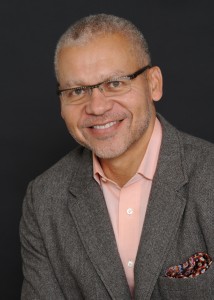
Today we welcome David Levine, Executive Director of Good Shepherd Housing to our 7 Questions series. Good Shepherd Housing (GSH) works to reduce homelessness, increase community support, and promote self-sufficiency. GSH was the Winner of the 2013 Washington Post Award for Excellence in Nonprofit Management and Named the 2012 Nonprofit of the Year by the Fairfax County Chamber of Commerce.
- What motivated you to begin with your organization?
I had started my career on Wall Street analyzing mortgage-backed securities. One thing led to another, one position followed another, but I remained in banking and the financial sector working on the mortgage market for fifteen years. Because I always assumed that I was creating affordable housing in my work at the banks (naive as that may have been), I was led to connect my work to creating affordable housing for the homeless and for those blocked from accessing affordable housing. In 2004, I made the leap from banking and securities brokering to the world of nonprofit affordable housing and homeless services work. I’ve never looked back. I like the aspect of seeing housing directly impact the lives of so many low-income working families and individuals.
These are families who had little to no chance of securing housing. Now I am fully dedicated to creating affordable housing for them.
- What exciting change or innovation is on your mind?
I like the fact that more and more housing providers are supporting the idea of Housing First. This one idea, this powerful innovation in the approach to homeless services, has moved hundreds out of shelters and homelessness to secure and stable home environments rooted in the community. Housing First says that we don’t wait for shelter residents to improve their lot in life. We don’t have the time and money to wait. Rather, we move them rapidly into permanent supportive housing meaning we give them housing first, and then we work on the sundry and difficult hurdles that are keeping them from long-term housing stability. Housing First has reduced the costs of serving the homeless, shortened the length of stays in shelters of the homelessness, and has had better long-term outcomes and costs savings for the community.
- Who inspires you?
Our residents, without question. Our formerly homeless residents inspire me. They are the homeless that you don’t expect to see. They are not the panhandlers and not the church-stoop dwellers (although, still, some come to us after having lived in their cars or in the woods). They are the hidden homeless. They are typically single mothers caring for small children who have lived for months doubled up with family and friends. They work minimum-wage jobs that do not pay near enough for them to afford a place. Their children have been subjected to unwanted moves and multiple disruptions. They can’t afford the rents. We come in as the landlord of last resort and get them housed with us.
After housing them, we then work with them to make sure they succeed. We want them to realize that housing is the first step toward real long-term success and a future for their families. Once they understand that, then they can change their lives. That makes all the difference in the world.
- What was your most exciting recent project/partnerships?
A couple of years ago, we teamed up with other Fairfax County-based providers in a program to offer rental subsidy vouchers to low-income residents in need of housing. Called the Bridging Affordability program, it has made a difference in the housing stability of hundreds of families. It also came about at the time when the federal government had pulled back on providing its regular housing choice vouchers. The program is innovative in that, in the spirit of a true Housing First approach, it combines both housing with support services to move these families to real self-sufficiency and long-term housing stability.
- What is the greatest challenge your organization faces?
We face the challenge of having too many low-income families struggling to find and access affordable rental housing. This is the reality we face. Too little affordable housing is available for them. They are trapped in a situation where they cannot end their housing instability and move to long-term housing stability because the housing is not there.
In our service area in southeastern Fairfax County, where two-bedroom rents are at $2,100 per month on average, a single mother working in a minimum-wage job would actually have to work six full-time jobs just to comfortably afford this rental housing. It is a situation of an imbalance in demand and supply: the demand for affordable housing far exceeds the supply and that supply continues to shrink.
As a result, rents increase for the available affordable rental units or landlords can become choosier. Landlords will look at credit scores more closely, or ask for criminal background checks, or check on your rental history with your last six or seven landlords. For our clients and for people driven into homelessness for financial reasons including bankruptcies, the reality of these hurdles makes housing that more difficult for them.
- What advice do you have for someone in your position?
Be patient and keep the long game in mind. The ED has to articulate that vision and commitment to service. The ED literally has to be switched on to the cause all the time, every day. Your staff responds to your emotions. Supporters respond. It is essential to keep that in mind. Every day the dedication, passion, exuberance and vision will win more to the cause and, in the end, see you through.
- What’s next for you?
We are looking forward to another year of making a difference in creating more affordable housing. We hope to purchase at least two, maybe more, housing units and maintain these as affordable units for our residents. We will also be getting the word out on our impact. We want to tell the world and our supporters and funders what we do in the community in new and engaging ways. It is important to tell that story of client success, of impact in the community, of making a difference.

 “While there was a large national discussion about the school-to-prison pipeline and the challenges facing African-American boys, there was little conversation about the girls. We kept thinking to ourselves, what about the girls?”

 In honor of National Mentoring Month, we welcome Nicole Lynn Lewis, Executive Director and Founder of
  SCAN (Stop Child Abuse Now)
 In honor of Domestic Violence Awareness Month we welcome Peg Hacskaylo, Executive Director of District Alliance for Safe Housing (DASH) to 7 Questions. DASH provides relief to survivors of domestic and sexual violence, through emergency and long-term safe housing, and innovative homelessness prevention services. Peg has been a dedicated advocate to alleviate homelessness for battered women for 20 years. Her work has spanned government, business, nonprofit, and community organizations to address this complex issue.
 In honor of Domestic Violence Awareness Month, we welcome
  In honor of Hispanic Heritage Month we welcome Rebecca Read Medrano to 7 Questions.