Skip to main navigation

Catalogue Blog

Mentoring Matters at Community Bridges

by Shannon Babe-Thomas, Executive Director, Community Bridges
image1Community Bridges is a local nonprofit with a mission to empower girls from diverse backgrounds to become exceptional students, positive leaders and healthy young women. We do so by addressing the developmental needs of immigrant and minority girls and their families living at or below the federal poverty level in Montgomery County, Maryland. Our integrated 4th through 12th grade after and out-of-school Girls Program supports the growth of our young women over a 9 year continuum by helping them understand their potential and life choices, learn creative strategies to become leaders and break their family’s cycle of poverty using education as a vehicle.
image2

We further extend our impact on Community Bridges girls by supporting them with one-on-one mentoring, college and career programming, service opportunities, educational learning trips and by offering workshops that provide resources and support for their families. Combined, our programs encourage the development of the entire girl so that she will have the greatest chance to reach her fullest potential.
image3The Community Bridges Mentoring Program connects positive female role models with diverse high school girls for an impactful mentoring experience. Throughout the course of the mentorship, mentor and mentee work together to achieve the mentee’s long- and short-term goals while developing a close, caring relationship based upon consistency, mutual respect and trust.

Nobody succeeds on their own: each young person’s strength and resilience is fostered by those who have taught them they can do anything they put their mind to. Barack Obama, National Mentoring Month Proclamation 2017

January is National Mentoring Month. Research has shown that youth with mentors are more likely to enroll in college, volunteer in their community, and hold leadership positions than youth without mentors. In short, mentoring matters.
image1 (1)Below, read the story of Community Bridges mentor Margo and her mentee Etsube to find out why mentoring matters to them.

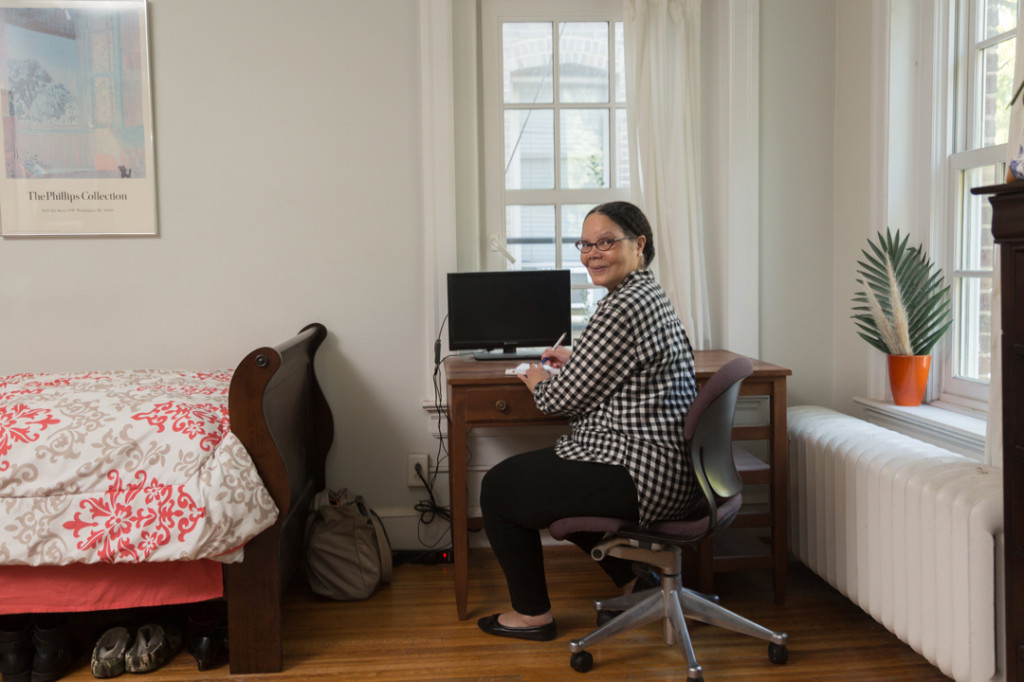
“Etsube says that when I walked into the room she had hoped I’d be her mentor. When I was, in fact, paired with Etsube, we talked readily about , the freedom that comes with a driver’s license, about her Ethiopian family. Etsube surprised me with her intensity it was a glimpse of her resolve to embrace opportunities to express herself.

I was not sure what to expect , but I know what I have found: richness and meaning through a warm new friendship.

In our first month I asked to meet Etsube’s parents. I arrived at their home and we enjoyed in the traditional way using homemade injera to pick up the vegetables. We talked about technology in kids lives, the classic masinko stringed instrument, and the importance of developing our own strengths in life.

In a fractured world, mentoring offers ways to knit together lives and cultures.”

image2 (1)
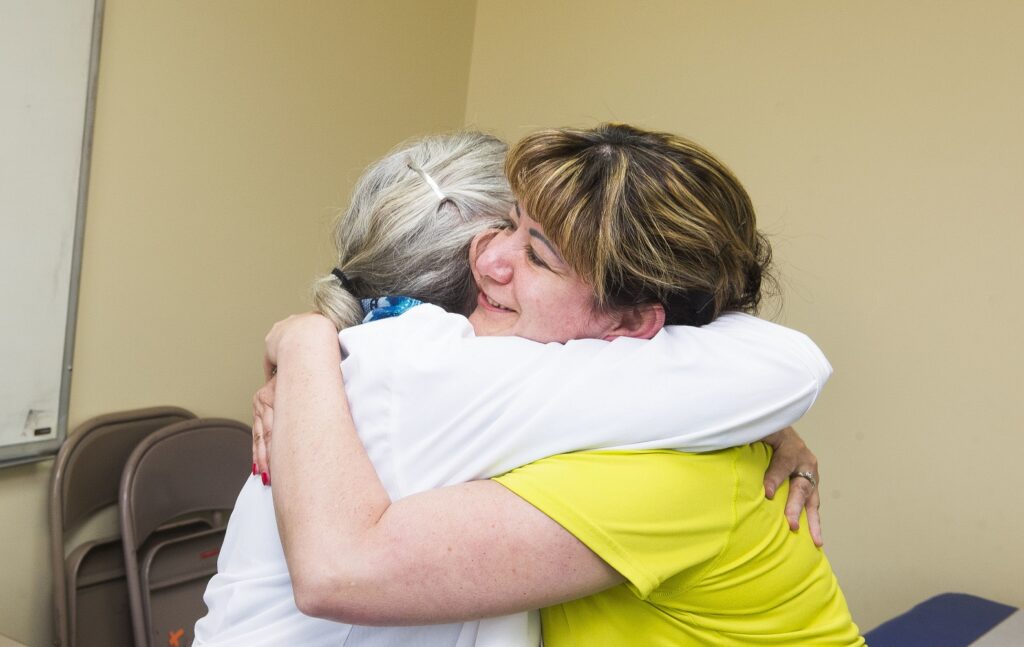
Margo and Etsube are one of many mentoring pairs in the Community Bridges Mentoring Program, and theirs is one of many stories showing why mentoring matters. You too can make a difference in your community through mentoring. Help inspire the next generation of leaders by becoming a mentor today! To learn more about Community Bridges go to www.communitybridges-md.org.

Learning Life Lessons with Friends of Fort Dupont Ice Arena

by Ty Newberry, Executive Director, Friends of Fort Dupont Ice Arena
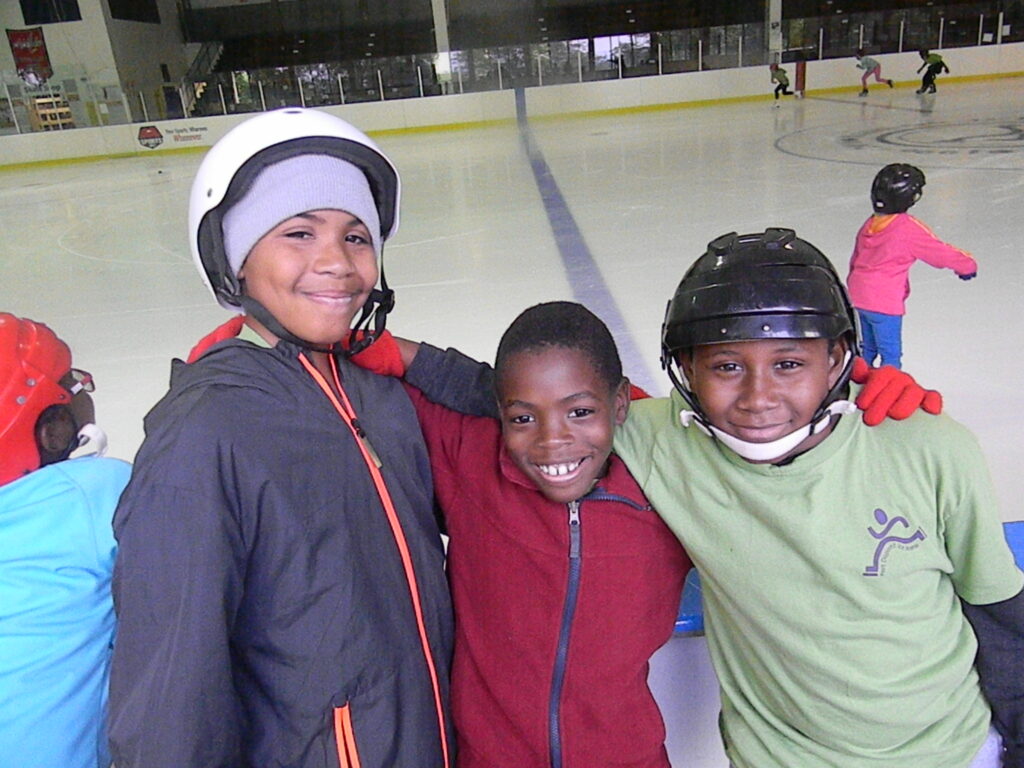
annual appeal photo 1Friends of Fort Dupont Ice Arena (FFDIA) is located in the heart of Ward 7 and serves 2,500 children annually; introducing them to ice skating, providing advanced instruction in ice hockey, synchronized skating, figure skating, and speed skating.
Approximately 60% of these children and teens live in or attend schools in underserved neighborhoods east of the Anacostia River in Washington, DC.

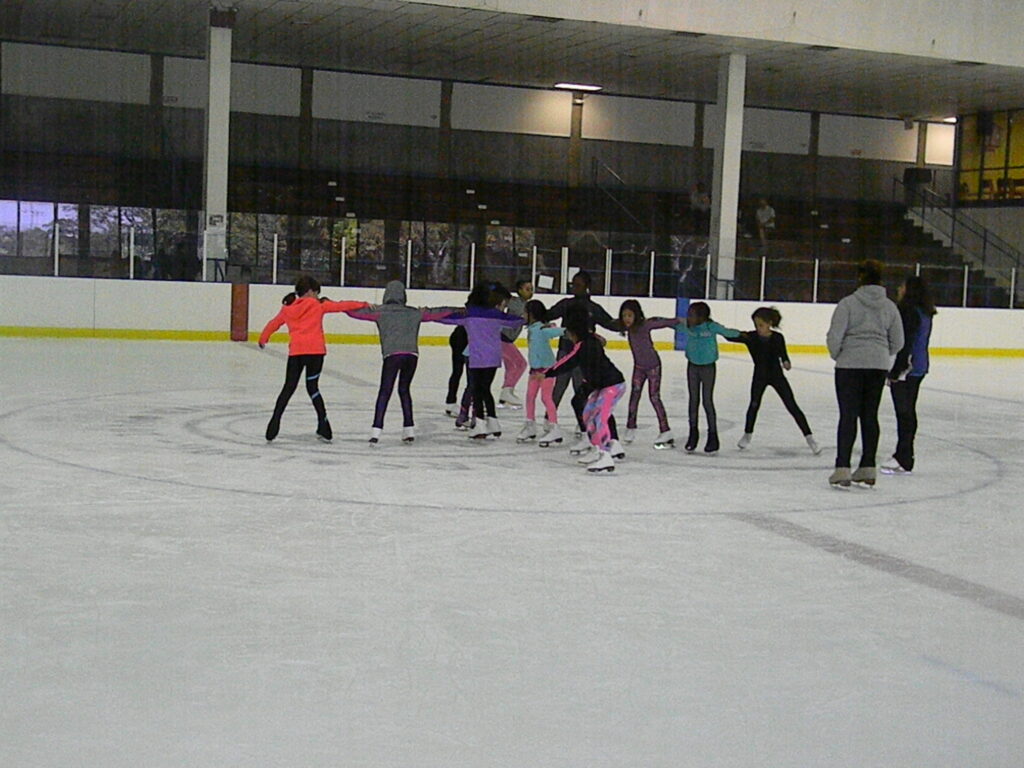
Kids On Ice (KOI) is a youth development program that uses sports to instill a positive self-image and the importance of an active and healthy lifestyle in children and youth ages 5-18. KOI teaches valuable life lessons beginning with a participant’s first steps on the ice. In the past 20 years, the number of skaters in our programs has grown from 11 to 2,500.

annual appeal photo 3

Skating provides multiple character-building opportunities and participants in KOI programs gain self-esteem while learning respect, fairness, reliability, courtesy, responsibility, sportsmanship, and the value of practice, and perseverance. Classes are taught in a group setting with children and youth ranging in age from 5 – 18 years, representing diverse racial and ethnic backgrounds.

Friends of Fort Dupont Ice Arena (FDIA) was established in 1996 to rescue the Fort Dupont Ice Arena in Southeast Washington, DC from closure. FDIA revitalized the arena and now operates the facility, providing a traditionally underserved neighborhood with an NHL-size ice rink, recreational and cultural activities, skating instruction and regular physical education programming for District schools.

The Fort Dupont Ice Arena is the only public indoor ice arena located in Washington, DC and is the only skating facility in the region that provides free skating programs to disadvantaged children. Our mission is to provide increased opportunity, education and inspiration to young people in Washington, DC and the surrounding area through ice skating and educational activities.

annual appeal photo 2

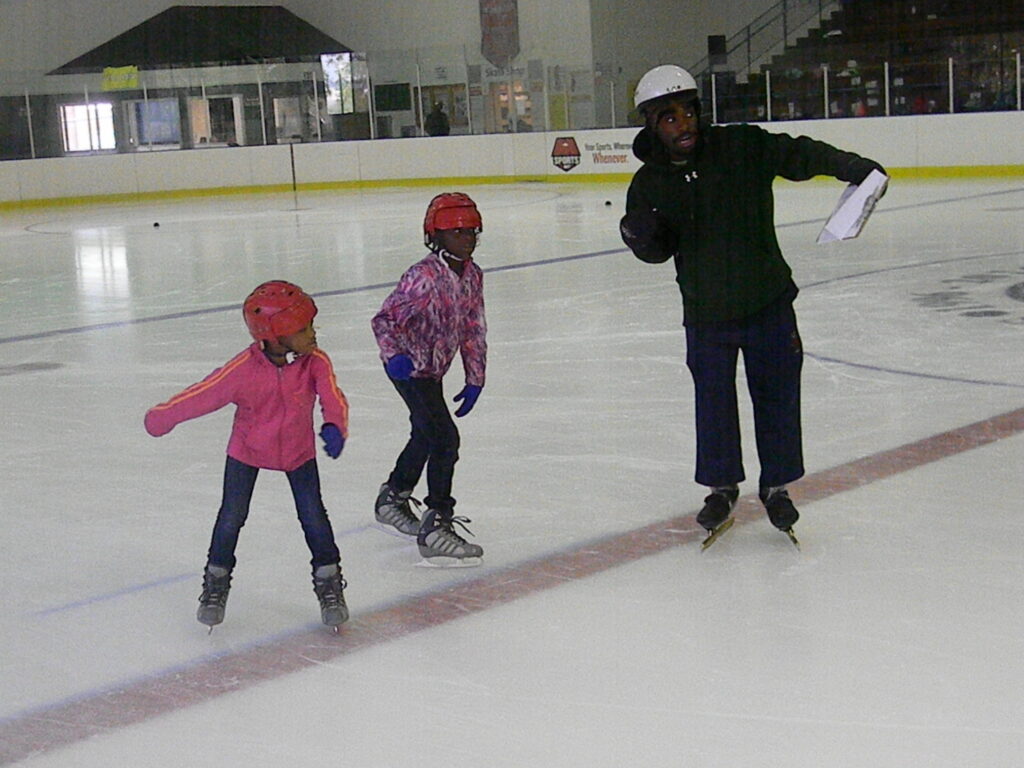
KOI consists of Learn To Skate or basic ice skating instruction, P.L.U.S. or advanced ice skating instruction, and Schools Skate For Fitness in which approximately 30 schools participate in physical education classes during the week. The Schools Skate For Fitness program allows for DCPS and Public Charter Schools to alternate typical gym time with an ice skating lesson. Camps are also available throughout the summer months. When kids succeed here, they know they can take that feeling and succeed in other places.

annual appeal photo 5

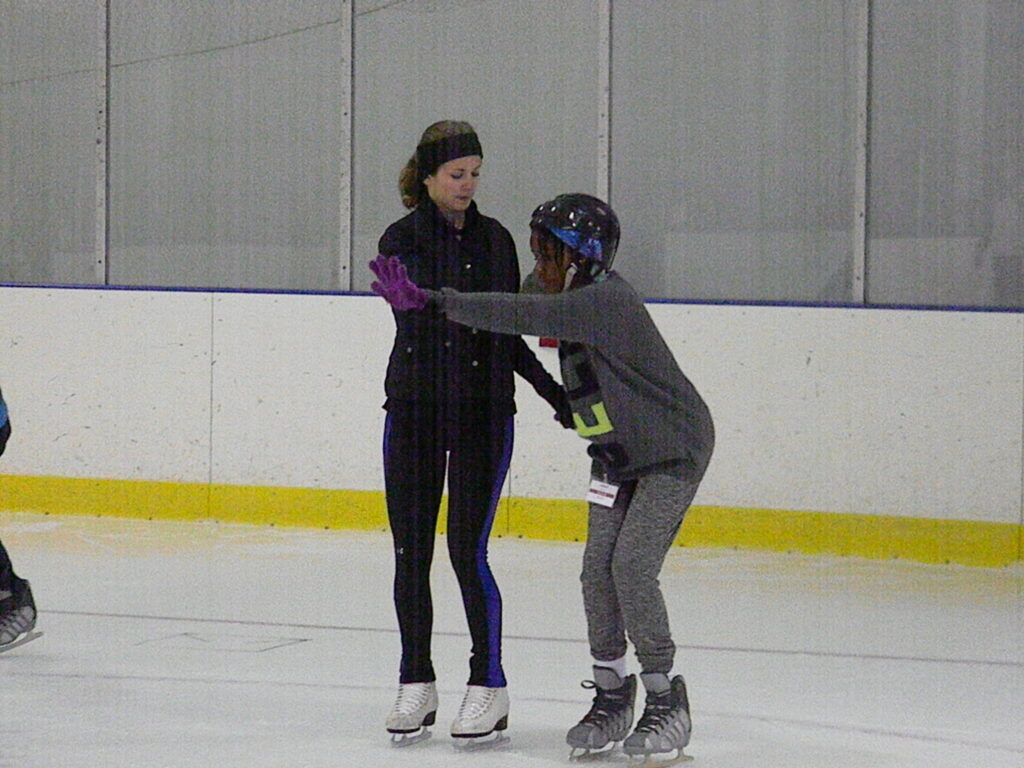
The opportunity to access a full-size ice rink in the inner city opens up a world of choices for kids who traditionally would not be able to participate due to the cost associated with ice sports. The best part of working at FFDIA is watching kids progress in skill level both on and off the ice while developing new friendships and learning life lessons in the process. Making a difference close to home happens every day in our warm, welcoming, supportive, diverse environment. Kids learn how to get up after falling down time and time again. They build critical self-confidence and self-esteem through off-ice programming that complements on-ice activities, all while being embraced by staff, volunteers, program participants, instructors, and parents.

Visit our website at fdia.org and call the rink at (202) 584-5007 to register your child for classes. Registration forms and complete information is readily available and accessible. All of our programming is from volunteer instructors; we truly value all of our volunteers because we know we could not do it alone. Volunteer opportunities vary and information can be provided upon request. Helping out our basic skills program or hosting a community service day with your company are just two of the various options. The facility is open to anyone during public skate times. Please follow us on Facebook,Twitter and Instagram.

Promoting Healthy Food and Culinary Careers with La Cocina VA

By Rocio Caicedo & Carol Duffy Clay, La Cocina VA

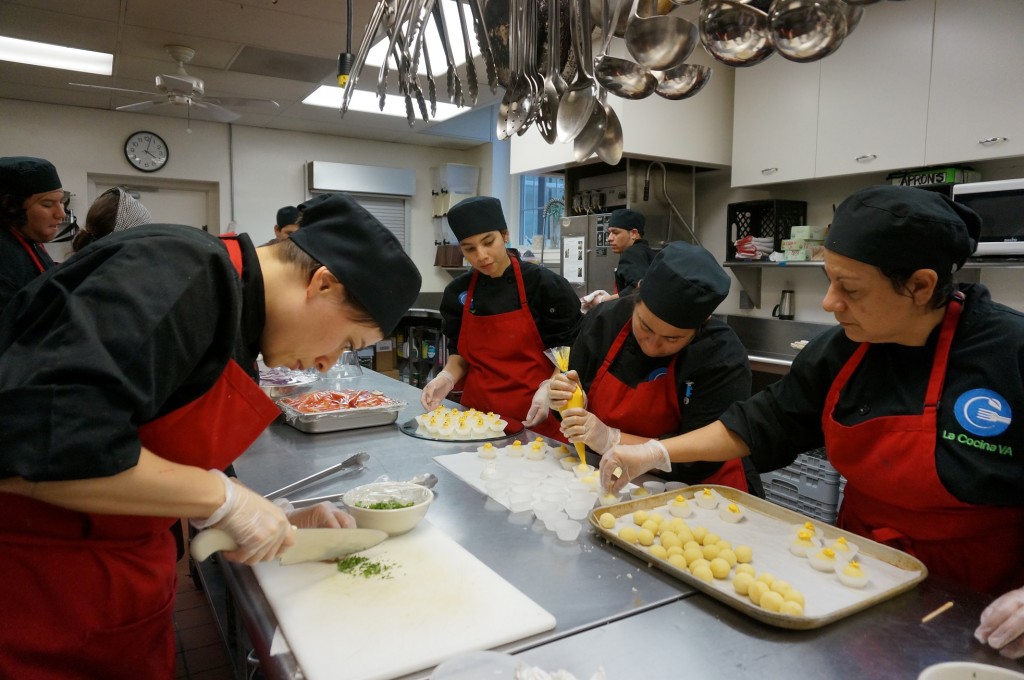
DSC07350 (1)

La Cocina VA works to promote healthy food and empower immigrants with culinary jobs and entrepreneurship skills. We generate social and economic change by helping vulnerable individuals to develop careers and to open businesses within the food service and hospitality industries. Additionally, the organization facilitates access to healthy and nutritious food for neighbors in need.

Patricia Funegra founded the organization in 2014 with the purpose of empowering unemployed members of the Latino community to secure a job by offering comprehensive bilingual Spanish/English culinary training and by giving back to the community through preparing meals for the Food Assistance Program. Recently, La Cocina VA has expanded its reach to offer an additional Small Business Development Program.

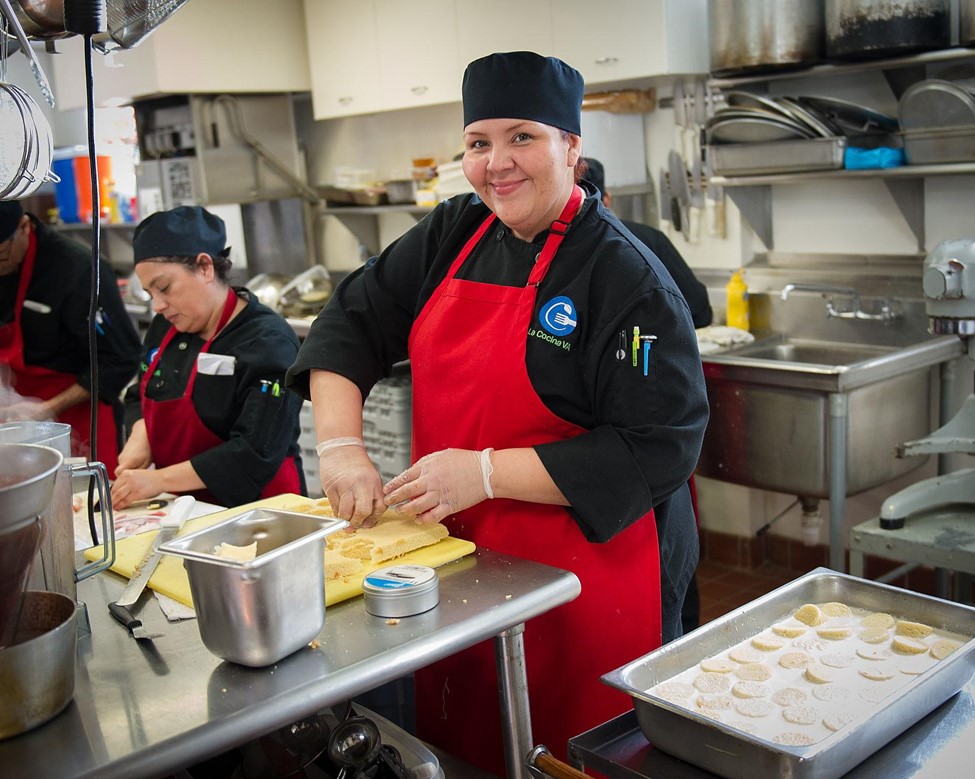
LaCocina6

Since operations began in September 2014, La Cocina VA has served 74 individuals; 90% of these individuals have been immigrant women, most of whom come from backgrounds of domestic abuse, human trafficking, and severe financial insecurity. To date 86% of the students graduating from the job training program are fully employed throughout the Metropolitan area and are working with some of the largest corporations in the region.

Picture2

Take Karina Herrera, for example, who five years ago didn’t know how to break free from a very problematic marriage while living in a foreign country and culture she didn’t understand. She faced a battle for her own economic independence and the ability to take care of three young children on her own.

A year ago, Karina was referred to La Cocina VA to participate in the full-time 13-week culinary job-training program. It was during the training that she received instruction in culinary techniques, vocational English, food safety, and job readiness. She also completed five days of on-the-job mentoring and a one-month paid internship at one of the organization’s employer partners from the food industry.

At the end of the training, Karina obtained two industry-recognized certifications: a Completion in Bilingual Culinary Job Training Program from Northern Virginia Community College, and a Workforce Development and Food Protection Manager Certification, ServSafe, from the National Restaurant Association.

DSC05455

Today Karina’s world has changed. She is now supporting her children as a financially independent mother and food service professional. She currently works at the Hyatt Regency Washington as a Second Cook making $22/hr and receives benefits and health insurance coverage for her and her family; she is advancing her career in the culinary arts and serves as a model for not only her own children but also to the other students and families that enter the kitchen at La Cocina VA.

Success stories like Karina’s are the fuel that keeps the staff and volunteers at La Cocina VA working hard to continuing affecting change within the lives of more students – the next generation of cooks.

For volunteering and other engagement opportunities, please contact Daniela Hurtado danielahurtado@lacocinava.org

Hope and Balance at Walter Reed National Military Medical Center

By Heller An Shapiro, Executive Director, ArtStream

Rollins (1)
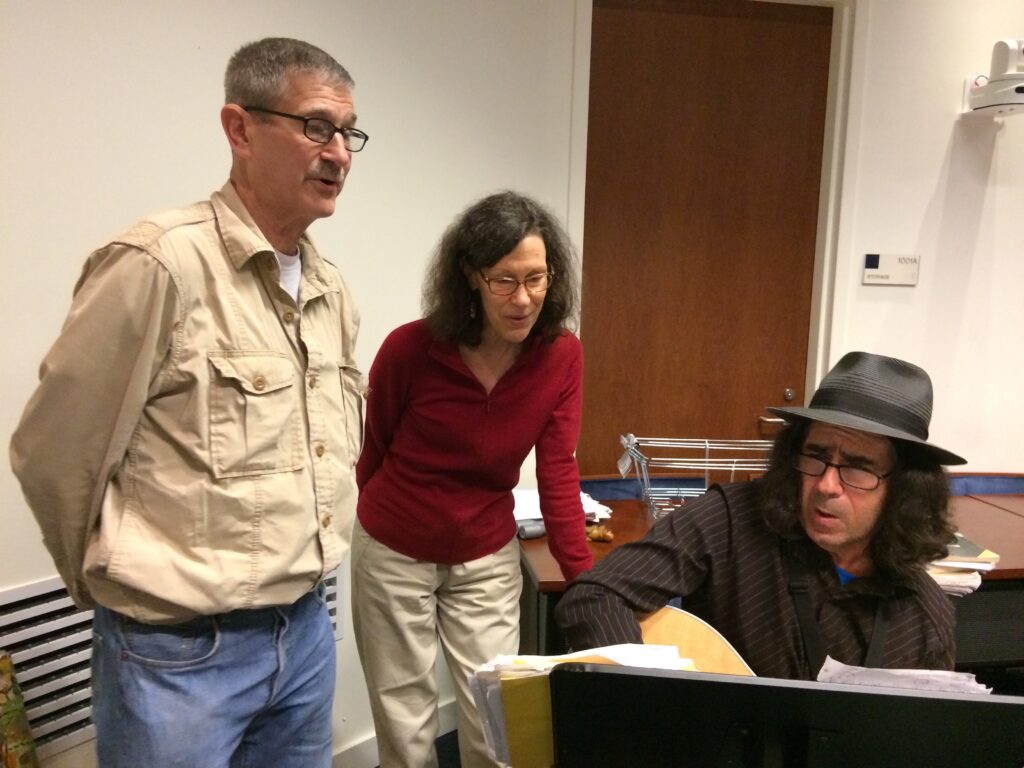
Every day, the staff at Walter Reed National Military Medical Center (WRNMMC) struggle to find hope and balance in a demanding position. In support of these compassionate men and women who care for wounded veterans, ArtStream, a local performing arts nonprofit, is proud to share You Are a Work of Art (YAWA).

This project, funded by the Prince Charitable Trusts, is designed for nurses, medics and technicians at WRNMMC to practice stress-management and self-care while building friendships through the arts.

ArtStream’s talented team of artists bring art projects, poetry, music, and camaraderie directly to the hospital staff. Sometimes, hospital staff engages with art in a five-minute pop-up project during the workday. Other times, they take an hour away from the job to eat, sing, make art, write poetry, and share their stories.

Legacy Ledgers Project:
Each year, the ArtStream program team meets with nursing staff to brainstorm project ideas for You Are a Work of Art. At one such brainstorming session, Dr. Judy Rollins, a consultant for ArtStream’s Military Hospital programs, recalls a nurse saying, “You know, there’s no history retained here because we come and go so often. It would be nice to have something that people could write in – put pictures in – so that we could remember each other and feel connected.”
JRollins (10)

ArtStream’s Military Hospital programs team got to work, creating 75 wooden scrapbooks, one for each of the nurses’ stations and clinics at WRNMMC. One of the artists, Rosanne Singer, recalls the team’s commitment to the hard work, saying, “This was a team effort, and the tediousness of the job was alleviated by working together and knowing that these ledgers will hold meaningful memories for the nursing staff. Everyone worked for hours straight, sometimes laughing and joking, committed to getting the job done.”

The Legacy Ledgers live up to their name at the hospital. They are proudly displayed on bronze easels at each nurses’ station and clinic at WRNMMC. Some are painted or stained. Others have been decoupaged as a preview of the creativity within. Any hospital staff member, patient, or family member can pick up the Legacy Ledger and enjoy it.
Legacy-Ledger

The hospital can be a stressful work environment, but it is also filled with supportive caregivers and uplifting stories. Inside the Legacy Ledger, many items create a history of the workplace. One page may have a nice note from a patient, the next may have a post-it note drawing from a former co-worker, long-gone from the hospital. Hospital staff members add pictures from parties, and craft projects from other You Are a Work of Art activities.

Once, at a You Are a Work of Art workshop, a nursing unit leader was so proud of his cupcake decorating skills that he said he would save a photo from the day in his unit’s Legacy Ledger.
A recent You Are a Work of Art project asked hospital staff to write a message about what it means to them to take care of others and to take care of themselves. The results were collected from all over the hospital and used to create a word cloud. This word cloud connects the feelings of nurses, medics, and technicians throughout the hospital. Each Legacy Ledger has a copy of the word cloud, further connecting the caregivers as a community.
Wordle2 (1)

Some personnel at WRNMMC have requested Legacy Ledgers to display at their offices or clinics outside the main complex. They are inspired by the idea and want to create their own histories as they help wounded warriors heal beyond the walls of the hospital. Fortunately, ArtStream can fulfill these requests.

On behalf of the You Are a Work of Art team, Dr. Rollins, says, “We are really pleased with the response to the Legacy Ledgers. Prince Charitable Trusts wants our projects to be in partnership with the people we are serving. The success of the Legacy ledger project is proof that this is a sound approach for supportive programming.”

About ArtStream:
ArtStream is a performing arts nonprofit based in Chevy Chase, Maryland with programming throughout the Greater Washington DC Metro region. We believe that when people make their own choices and are engaged, stimulated, challenged and inspired, they surpass both their own and others’ expectations.

ArtStream’s programming includes Military Hospital programs at Walter Reed National Military Medical Center (WRNMMC) and Inclusive Performing Arts programs for people with intellectual and developmental disabilities (IDD), including autism and other social and behavioral needs.
Military Hospital programs include Allies in the Arts, a bedside arts program for patients and families at WRNMMC, and You Are a Work of Art, which focuses on arts experiences to build resiliency for hospital staff at WRNMMC. Allies in the Arts was featured in the 2013 white paper Arts, Health and Well-Being across the Military Continuum and the July 2015 issue of Art & Health. You Are a Work of Art was featured in the 2017 white paper Arts, Health and Well-Being in America.

ArtStream’s Inclusive Performing Arts programs include inclusive performing companies, performing arts classes, and classes that use the performing arts to teach social skills, self-advocacy, and pre-employment communication skills.
ArtStream’s inclusive performing companies perform for the public in Maryland and Virginia. See www.art-stream.org/see-a-show for a full schedule of events.
Inclusive Performing Arts programs welcome adult and teen volunteers to learn as peers with the participants. See www.art-stream.org/volunteers for volunteer opportunities. Provider organizations for people with disabilities may engage ArtStream teaching artists for one-time workshops or weekly classes. See www.art-stream.org/bring-artstream-to-your-community for more information.

Hope for the Future with Woodley House

By Linda Meixner, Development Director, Woodley HouseIMG_0675

Woodley House is a community-based organization dedicated to helping men and women struggling with persistent mental illness live full and healthy lives with dignity. We offer the opportunity to heal within a safe and comforting residential community as they work toward recovery and reclaiming their lives.

Woodley House serves over 300 adult men and women each year who have been diagnosed with severe mental illness, many of whom are lower-income and at risk of becoming homeless. We provide a residential housing program and supportive services needed to achieve greater independence. Mental illness cuts across all socio-economic and ethnic groups, but is often ignored or overlooked due to the entrenched stigma surrounding it. Woodley House exists to help our residents attain the stability and life skills needed to recover and reintegrate into their community.
IMG_0669

One in five of us will experience a mental health issue in the coming year — this affects us all. For some, this may be a temporary period of intense anxiety or depression, while for others, the reality will be much more severe and long-lasting. When your mind is working against you, it can be very isolating and the challenges of just living each day can be truly overwhelming.

Woodley House takes a whole-person approach, viewing our residents as individuals, not simply as clients with a diagnosis. We know that having a home with a welcoming, family-like environment is critical to achieving stability and hope for the future.

IMG_0573

We offer a range of housing, from short-term crisis stabilization, to longer-term group homes and finally, shared apartments throughout the city as part of our Supported Independent Living Program, so we are there – through each step of their journey to recovery. But simply providing a home, while very important, isn’t enough. People need to have the ability to maintain that home to be truly successful.

Woodley House offers personalized support through our Life Skills Trainers who meet with each resident, both individually and in groups, multiple times per week. They work together on issues particular to that resident, from basic hygiene and room/apartment maintenance, to budgeting, nutrition, communication skills and job readiness. We work with, not for, our residents and this very personal approach has proved successful for nearly 60 years.

Celebrating our 60th anniversary in 2018, we have succeeded by offering essential, life-changing services for a very vulnerable population.

  • “Success” for Woodley House means the ability to continue to provide our residential and supportive services long into the future for the men and women in the District who struggle each day with mental illness.
  • “Success” is also when our residents, helped by the daily support of Woodley House, overcome the vagaries of their mental illness and “graduate” to a bright, secure future by achieving and maintaining their stability in the most independent lives in the community that they can manage.
  • Many residents move on to greater independence in shared, semi-independent apartments, or to total independence. For others, their best success is achieved in a more structured environment helping them maintain a stable, full life.

Woodley House serves the full spectrum of people needing our help and we applaud them all.

IMG_0638

A basic tenet of Woodley House is that each person is viewed as an individual and will be treated with the dignity and respect that we all deserve. The goals of one resident might differ from those of another, but they all share the desire to remain stable and work toward fuller, more independent lives. Our residents come to us in varying stages of recovery, so success for some might mean appreciating a stable, caring home after years on the streets, while others may be further along on their journey, and a new job might be the highlight of their year.

One resident of Holly House recently got a part-time custodial job at Howard University and is so excited that she is always waiting by the curb at 6:30 in the morning for the van that picks her up at 7 to ensure that she won?t be late! Success for our residents is individual, but all share the goal of learning to live with their symptoms so that they can achieve the fullest, most productive life possible.

Woodley House has been serving our community for nearly 60 years, but has remained a secret to far too many over the years. We welcome the opportunity to introduce ourselves and share the critical role we play to those who turn to us each year. For more information about Woodley House, please contact development director, Linda Meixner lmeixner@woodleyhouse.org to arrange a tour or simply to find out a bit more about our program. Donations are ALWAYS welcome and can be made online at www.woodleyhouse.org or mailed to: Woodley House, Inc. 6856 Eastern Avenue, NW – # 300 Washington, DC 20012.

Washington Improv Theater: The Case for Laughter

by Sarah Marksteiner, Washington Improv Theater
Tiovivo

A Need for Laughter
In Washington, D.C. (and throughout the country), people crave connection and community – yet we increasingly isolate ourselves. While our world becomes more digitally connected, we grow increasingly disconnected from one another, caught up in the grind of DC life. Now, more than ever, we need to find common ground and engage. We need to laugh and communicate with one another.

Washington Improv Theater has created a space that ignites genuine human connection – a community fueled by the deeply impactful nature of longform improv. At WIT, improv brings people from diverse backgrounds, often with seemingly little in common, together to learn and play in a safe and judgement-free zone. Through improv that WIT aims to unleash the creativity of Washingtonians.

Love Onion
Inspiring levity through dynamic, one-of-a-kind performances
Artists at WIT practice longform improv, an exercise of live, collaborative theater in which actors can weave complex stories set in any space and cast themselves in any role. Each performance becomes an unscripted, thrilling world premiere. Washington Improv Theater hosts over 300 performances per year.

Improvisation as a form uniquely engages audiences by sharing with them the moment of creation. Our community of six company ensembles and seven Harold teams establishes warm rapport with our audiences as they create one-night-only works of art. WIT also stages special project shows including the satirical mock election POTUS Among Us where improvisers lobby for audience votes and the dark, dramatic murder mystery Citizens’ Watch inspired by the British TV series Broadchurch.

A treasured patron tradition is our weekly free Harold Night, where our teams bring new life to the classic format. Each night ends in a community-wide improv ‘jam’ where novice audience members can try their hand at improv alongside seasoned performers and current students.

_DSC8471
Creating connecting through arts education
At WIT, we believe improv is for everyone. Our inclusive classes program, which enrolls 1,500 annually, attracts a student body spanning age, career, and economic background to its curriculum. And we take accessibility seriously. We offer at least two free Improv for All workshops monthly, reaching every ward of the District. This year, we proudly launched our first Diversity Scholarship toward tuition in the classes program with the aim to ensure more diverse communities can pursue improv.

The benefits of improv skills like confidence, creativity, and supportive collaboration are universal. Our WIT@Work program enhances these skills in the professional sphere by conducting applied improv training seminars in the workplace. WIT@Work more than doubled in scope last year alone, bringing a spirit of “Yes, and” to organizations like Deloitte, Goodwill, NIH, The American Red Cross, and NPR.

Our growing youth programming teaches the District’s kids the power of positive collaboration and creativity. Our work includes engagements at DC Public Elementary Schools such as a semester-long after-school program at Marie Reed Elementary School.

Get involved in our community
There are a myriad of ways you can get involved with Washington Improv Theater.

Friendly Visitors and Strong Partnerships at Senior Services of Alexandria

by Mary Giordano & Mary Lee Anderson

friendly visitor

Every week in the City of Alexandria, more than sixty volunteers visit a senior for an hour or more in their home, apartment, assisted living or healthcare community through the Friendly Visitor Program of Senior Services of Alexandria.

The program is designed to enhance the quality of life of socially isolated seniors by providing social interaction, mental stimulation and emotional support.

Recently, a volunteer, Paul, was matched with “Mr. S.”, who was the Clerk of the Supreme Court during the time Thurgood Marshall was a Justice of the Supreme Court. As a videographer, Paul plans to create an oral history of the many fascinating stories “Mr. S” tells during their visits.

Another volunteer, Megan, is visiting “Mrs. V.”, who received a Master’s Degree in Mathematics in the 1940s and was one of the first women to work on scientific computers in the country. Megan plans to bring the movie, “Hidden Figures”, on an upcoming visit to watch together.

A few of the volunteers bring their dogs or small children on their weekly visits. Some pairs play cards or Scrabble together or go to activities within the assisted living community including musical performances, bingo and chair yoga. The unanimous sentiment of both the seniors and volunteers in this unique program is the realization that what starts as a weekly visit becomes much more than that – a special friendship.

Senior Services of Alexandria and Rebuilding Together Alexandria, are teaming up to provide free in-home safety inspections for seniors who currently receive Meals on Wheels. This program came about from the “Meals on Wheels America” campaign to provide seniors with a “more than a meal” support so they can remain in their homes as they age.

Earlier this summer, “Meals on Wheels” clients received a flyer from Senior Services of Alexandria for a free home safety check by Rebuilding Together Alexandria. Several clients requested free home repair services from Rebuilding Together. Our Senior Services of Alexandria staff responded and developed an “action plan” to correct any hazards. We will continue to provide the information about the safety checks to any new clients added to Meals on Wheels program.

“Conducting a home safety check can go a long way in preventing problems that could lead to a fall, other injury, or loss of independence,” stated Katharine Dixon, President & CEO of Rebuilding Together Alexandria. “By spotting these hazards and taking some simple steps to correct them, seniors can continue to live at home safely.”

At the core of the “Meals on Wheels” service is a nutritious meal, companionship and a watchful eye on the health and safety of our seniors. Adding the home safety inspection is just another way of ensuring that Alexandria seniors are remaining safe in their own homes and aging with independence and dignity.

If you know of a senior living in Alexandria who would benefit from this program or have an interest in volunteering, please Mary Giordano, Program Director, at (703)836-4414 Ex. 120 or by email at friendlyvisitor@seniorservicesalex.org.

Developing New Solutions With Food Recovery Network

by Regina Northouse, Executive Director, Food Recovery Network

File_000 (1)Food Recovery Network (FRN) is the largest student movement against food waste and hunger in America. FRN unites and empowers college students to recover surplus food from their campus dining halls and surrounding food businesses and donate that food to hunger-fighting nonprofits who feed those most in need. With 230 university chapters across the country and growing, FRN’s goal is to support higher education in being the first sector where food recovery is the norm and not the exception. Through the power of highly motivated student leaders, FRN has recovered and donated more than 2.1 million pounds of food since 2011.

FRN positively impacts our communities. Our student leaders support over 350 hunger-fighting partners including homeless shelters, food banks and food pantries, providing them with wholesome, nutritious meals to give to their clients.

The U.S. food system is marked by an alarming paradox: nearly 40% of food produced in the US goes to waste, while 48.1 million Americans experience food insecurity each year, one out of seven of whom are children (NRDC 2016; USDA 2015).

Food Recovery Network was formed in 2011 by college students at the University of Maryland who wanted to address these issues of food waste and food insecurity, and their social and environmental impacts. These impacts include wasting 23% of potable water and 18% of valuable cropland, as well as emitting methane into the atmosphere, contributing to the rise of greenhouse gas emissions and global climate change.

What sets FRN apart, is our innovative model which empowers and educates young leaders and breaks down barriers between college campuses by helping students develop new solutions to problems in their communities, to connect with nonprofits in their area and help and build relationships with their neighbors who also happen to be in need. Through our model, our civic-minded student leaders gain confidence in their own abilities to challenge the status quo and fight for what is right.

IMG_0475 (1)

Food Recovery Network is a national nonprofit that applies local solutions to specific communities to ensure surplus food gets to those who need it most. I know I speak for my amazing team at FRN headquarters in College Park, Maryland, when I say we are continually inspired by our hard-working student leaders all over the country.

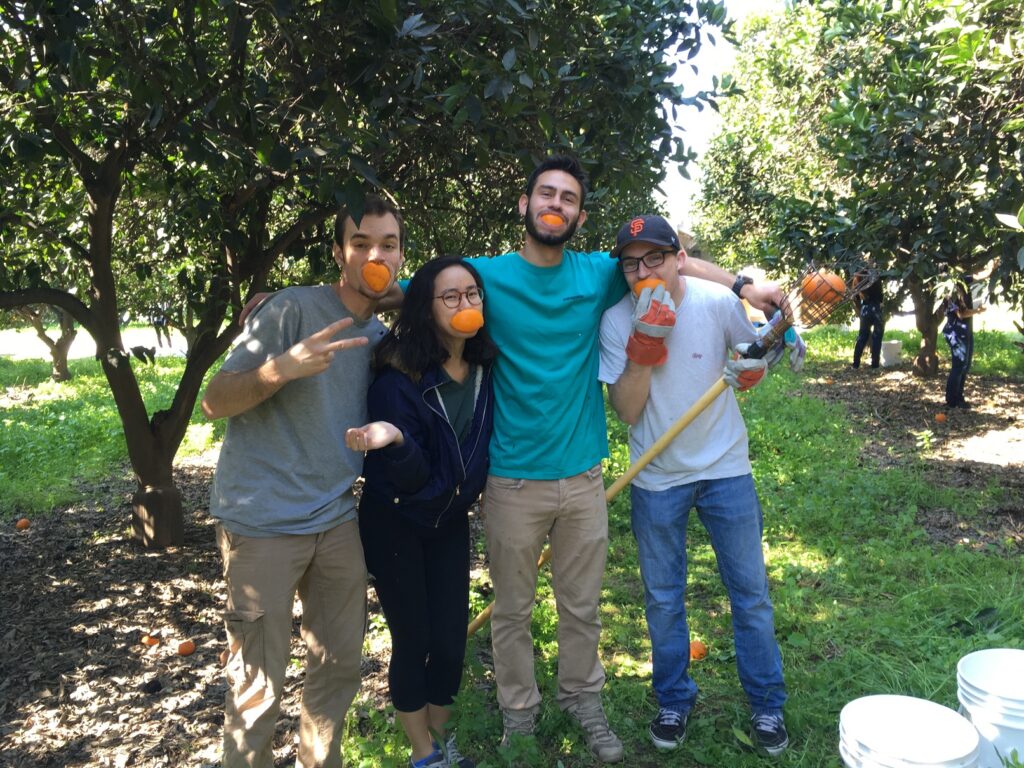
Many of FRN’s students often do more than volunteer with their FRN chapter. Our students pursue other opportunities in the food recovery movement, such as gleaning from local farms, recovering nonperishable food items during the days when students on their college campus move out for the semester, and participate in summer recoveries. The student leaders also volunteer with the nonprofit where they donate their surplus food by tutoring, preparing and serving meals and helping with cleanup initiatives.

We talk to our leaders all the time and there are so many inspiring stories. Actually, when asked about her relationship with her chapter’s partner nonprofit, one student from Michigan said, “Every time I brought food to our partner agency, I would meet one of the residents and they would be so kind and grateful! I loved being a part of this amazing organization and movement! It has made me realize that I want to incorporate more awareness and advocacy in my future career.”

Recently, we were told by an FRN alum that one of her limiting criteria for searching for which grad schools she wanted to apply to was whether that the school had an FRN chapter so she could remain engaged as a graduate student.

At the heart of what drives FRN to pursue the work we do is two things. First, being able to provide a source of nutritious food to those who would otherwise not have access. We’re here to be part of our communities. Second, we want to change behavior to reduce food waste at the source post production. This is one of the highest instances of food waste (versus food wasting on the vine for example). We don’t want to overproduce food in order to donate it, we want to ensure good food isn’t wasted to begin with, and when there happens to be surplus, which, let’s be honest, much of the time there will be, that food should feed our fellow neighbors in need.

In addition to recovering food from their campuses, students have the opportunity to volunteer their time with the hunger-fighting partners and the individuals they serve, highlighted by Lighthouse Outreach Ministries, “Everyone likes to see the college kids ride up! The homeless have families that they are separated from and it makes everyone smile to know they are not invisible.”

FRN is dedicated to continuing our work in the food recovery space and to expand the movement, as we continue to provide support and resources for driven, civic-minded students seeking opportunities to engage with their communities and build their leadership skills. I look forward to collaborating and partnering with individuals and other organizations to move the needle on the issue of food waste and food loss. I hope those reading this post know they can be part of the conversation with us!
Copy of gleaning 3

FRN hopes to see our network expand to 350 chapters across the country, and our ability to recover 1 million pounds of perfectly good food year-over-year. We’re working to expand our Food Recovery Verified (FRV) program that recognizes and rewards food businesses of any type that are working to fight waste and feed people through food recovery. FRV serves as a third party that verifies that food businesses are donating surplus food to hunger fighting non-profits. We list those businesses on our website, we have a communications strategy to give voice to those businesses, and each business receives a window sticker to display on their doors or on marketing materials to tell patrons their business does the right thing with their surplus food. To date, FRN has over 90 food businesses that have been verified including Adidas, Zulily, and Twitter Inc.

Success is when each point within our food system has decreased food waste by implementing better practices to avoid overproduction of food–meaning at the farm level, the producer and purchasing level, at the retail level and individual consumer level. I know that as this conversation takes hold in the consciousness of more people, FRN is part of that behavior change.

Success is having the proper logistics in place for when there is surplus food to properly and effectively distribute that food to those who need it most across the country. We also want our student leaders to be part of the full process. Our students are the future entering into literally every sector in our country as business owners, chefs, teachers, engineers, technicians and farmers who all share the FRN experience. That experience has shaped their thinking about their ability to positively impact the lives of their community members, as well as how to reduce food waste. That’s the FRN lens. We want that FRN voice to continue to speak even once our students have graduated from college.

A great day at FRN features our small but mighty team at the national office working to support and expand the national network. That includes connecting with existing chapters on the phone, social media, emails and getting them what they need to go out and recover, or move closer to achieving their newest goals for the semester.

FRN works closely with our hunger-fighting partners collecting vital information, analyzing it, and then passing along new resources to our chapter leaders. At FRN, we’re constantly refining our work–what can we do better, what have we learned from our previous projects, what didn’t we do well, and where did we knock it out of the park?

As we grow, how we scale has to change, and how are we addressing those needs? Hearing the hum of our feedback loop in the office–during our project planning meetings is important, too. Additionally, our staff works with non-university food businesses that recover food to recognize them for their efforts and inspire other businesses to begin recovering through our Food Recovery Verified program.

All of these variations operations take place in our national office, made possible by our dedicated, passionate, and collaborative staff!
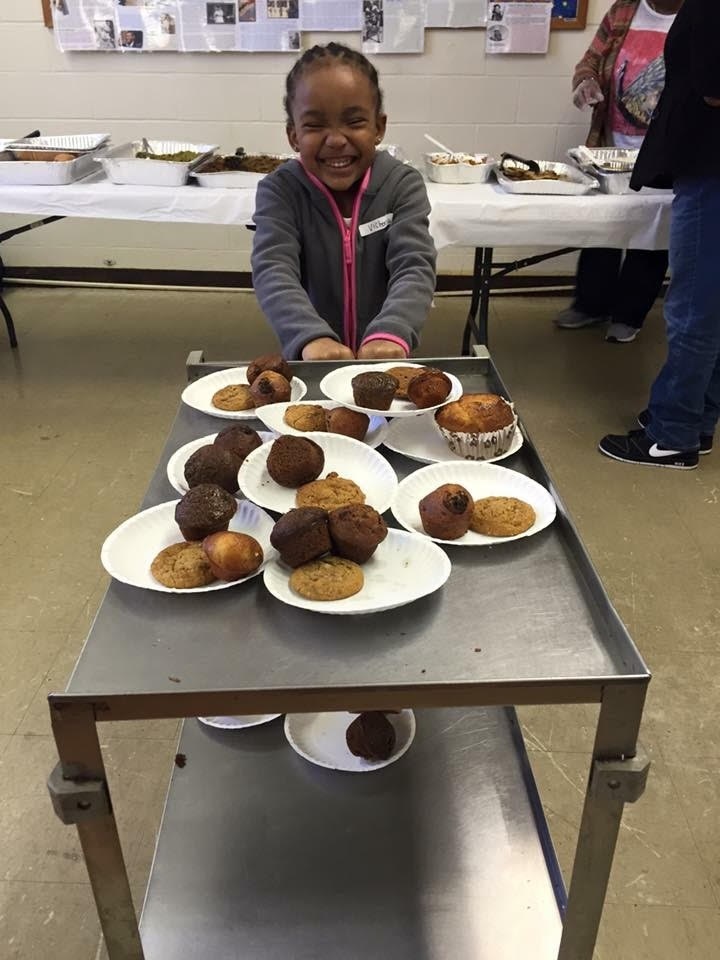
Monmouth University PA

There are plenty of ways to be involved, and we need you to be involved with us!

  • FRN welcomes all interested volunteers, including non-students, to help out with their local chapters!
  • Non-student volunteers are encouraged to reach out to their local chapter leaders, as many chapters seek the help of additional volunteers as drivers or mentors, if not during the actual recoveries as well. A list of chapters by state and their respective chapter leaders, contact information can be accessed here.
  • The national office is always here to make connections, too. FRN national is setting up gleaning dates throughout the fall in and around the Washington DC, Maryland and Virginia area. We would love for you to help us recover perfectly good food right at the farm!Contact our national office now to put your name on the list for more information.
  • Help us expand! If you’re alma mater isn’t on the FRN map and you know students who attend and would make a great leader, put them in touch with us! Students can start by filling out our very short application.
  • Support our second annual National Food Recovery Dialogue. This is our annual conference that brings together our student leaders, industry experts, and community members to put into context the bigger picture of our work, and is a space to roll up our sleeves to problem solve on-the-ground problems, share resources, and break bread with one another.
  • Have some fun and start a “Zero Waste Challenge” for FRN. That can mean reducing your waste by eliminating plastic straws from your daily use, or paper napkins like our national board member Jessica did, or it could mean trying to go completely zero waste like our other national board member, Claire did. Anyone can do it, and it’s quite the amazing experience!
  • If you have an expertise that you think can help FRN, please reach out to us. We’re growing and need dedicated support in several areas. Please contact FRN headquarters by emailing info@foodrecoverynetwork.org or phone +1 (240) 615-8813 with any questions, or to be involved.

Compassionate Care with Culmore Clinic

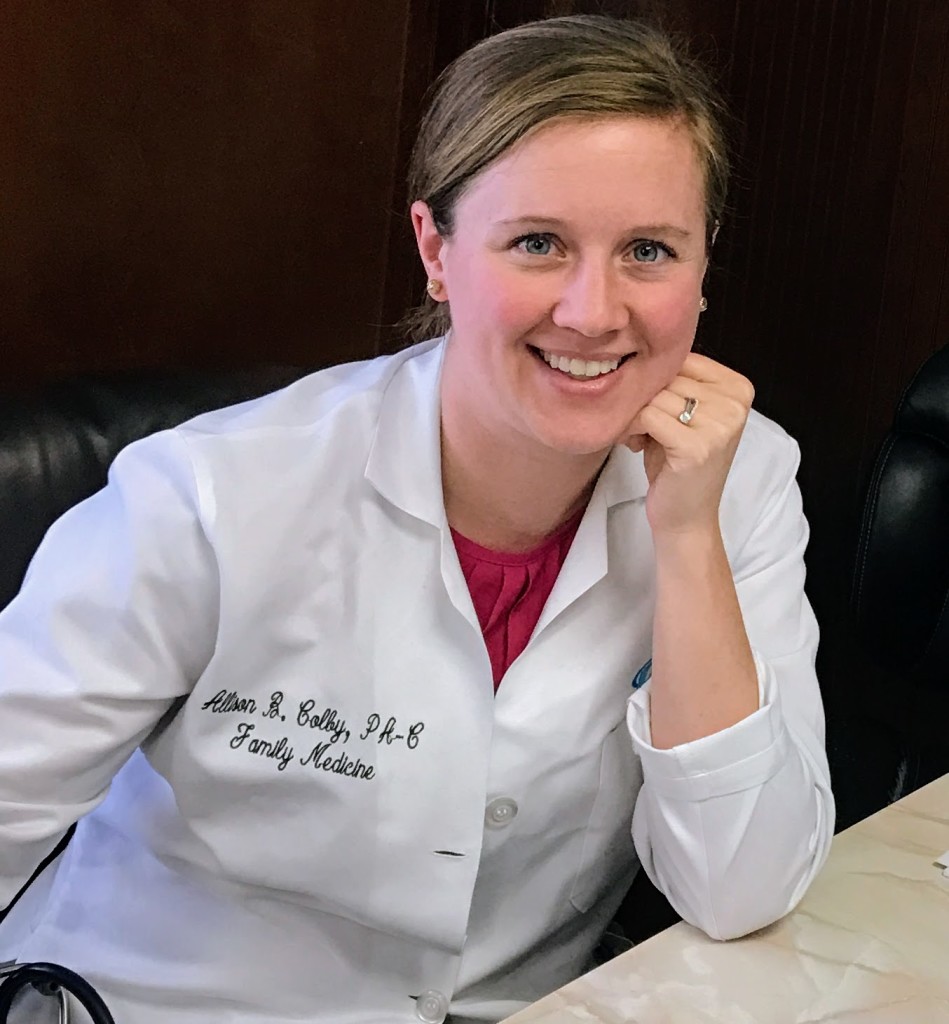
by Allison Colby,Interim Executive Director, Culmore Clinic
7881CF48-A700-4DA5-AEAF-A5262C8DF3AEAccess to healthcare continues to be a crisis. An estimated 50,000 people are still uninsured in Fairfax County, Virginia, alone. Barriers to accessing medical care are legion. Affordability, language, and documentation are just a few examples. Dedicated individuals and congregations thought something should be done. In 2007, they opened Culmore Clinic.
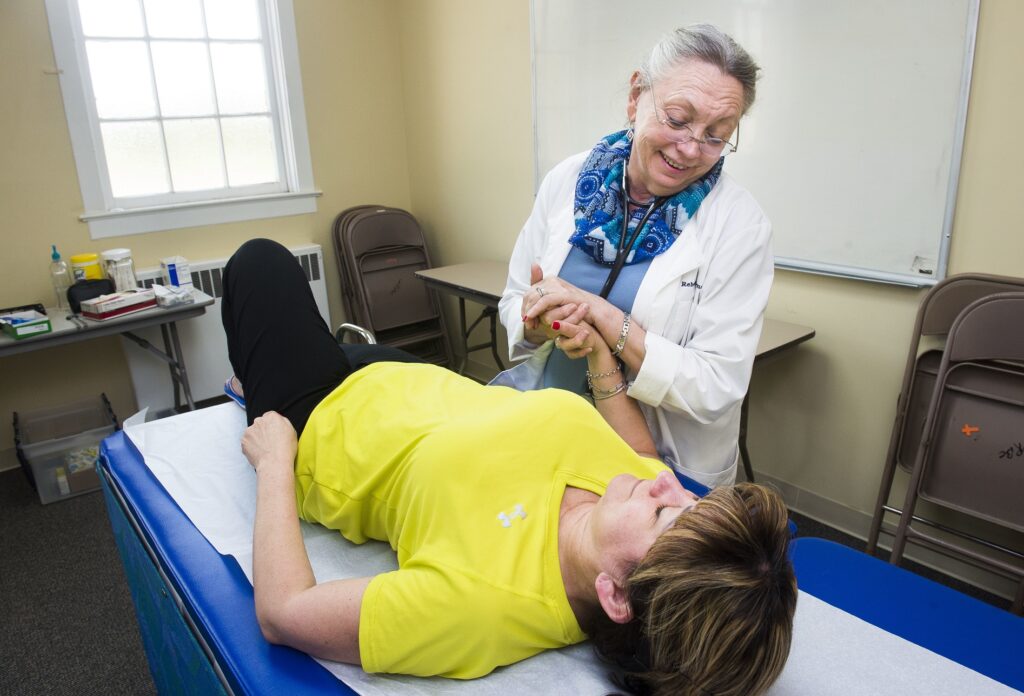
Culmore Clinic is a 501c-3, non-profit healthcare clinic serving low-income adults in the Bailey’s Crossroads community at little to no cost. Supported by a diverse group of interfaith volunteers, healthcare providers, and donors, Culmore Clinic offers compassionate medical care, counseling services as well as specialty referrals. Their commitment to care for all is displayed with their top-notch medical interpretation services to ensure effective treatment to the culturally diverse community in which they work. Volunteers founded The Clinic in 2007 and to this day it is still significantly volunteer run, allowing more resources to go toward patient care.

DSC_3450

I was drawn to The Clinic because of its unique and meaningful mission and am impressed by the way it is lived out in daily practice. Culmore Clinic is, at it’s core, an interfaith compassionate health care center. By naming and claiming these words in our mission it ensures that all will be treated with respect, diversity will be celebrated, and care will be patient centered and culturally competent. Personally, I come from a family rooted in faith and have been drawn to serving those who may have been overlooked. I value not only tolerance but true collaboration between faith groups and cultures to enrich the lives of the entire community. The Clinic does not just provide healthcare, it is a neighborhood beacon. A safe haven for all. A forum for dialogue and catalyst for change. This is why I serve here.

Success for us is when the care and resources we have worked hard to establish, meet the needs of the community we serve. We are far from “doing it all” but when we are able to connect patients with the services they need, in an otherwise expensive and confusing system, we are successfully serving our community. This matching of need with relief can take many forms at The Clinic.

DSC_3476

Some days it means we are able to send a female patient for a free mammogram and prevent breast cancer. Some days it means we are able to help a patient navigate the pharmacy system and teach him how to use insulin for the first time. Success at The Clinic can take the form of countless volunteer hours spent making sure that a necessary surgery will be possible and affordable. It can mean connecting a patient with established programs in the county for much needed case management and housing support. Impacts, both large and small are the success stories that keep us pushing forward.

We are in the “business” of providing accessible, quality healthcare to all, but we certainly cannot do it alone. Our best days happen when we partner with neighboring organizations to provide an even more comprehensive network of support. For example, the generous Food Pantry volunteers, on site from Columbia Baptist Church @ Crossroads, have taken to providing our patients with seasonal fresh produce, in addition to assisting with nutrition bags at our Diabetes Group Visits. We have “great days” that involve visits from members of a local retirement community who set up our exam rooms and deliver dental care packages. Our partners in diagnostic and lab testing continue to provide us with free and reduced services to meet our busiest of great days! Culmore Clinic is committed to using resources wisely and putting all we can back into improving delivery of care. With partnerships like these, we are able to provide even more great days for our patients to come.

DSC_3464

I invite you to check out our website at www.culmoreclinic.org where you can find more about our volunteer opportunities. We’re always looking for RNs, healthcare providers, and those with administrative, data collection and interpreter knowledge. Be sure to sign up for our newsletter too where we send out updates on Open House events where you can take a tour of The Clinic. Also, we encourage you to spread the word about Culmore Clinic to your doctors and healthcare professionals as we are always looking to expand our specialty referral network.

Building Homes and Rebuilding Lives with HomeAid Northern Virginia

By: Kristyn Burr, Executive Director, HomeAid Northern Virginia

HANV - Youth for Tomorrow Ribbon cutting

This month, HomeAid Northern Virginia completed our 116th project to improve and expand housing provided by homeless shelters and supportive housing facilities – helping vulnerable individuals and families in our local area rebuild their lives with a secure, stable place to call home. Our most recent project was collaboration with the Brain Foundation of Fairfax County (another Catalogue nonprofit). With the assistance of HomeAid Northern Virginia, two Brain Foundation group homes that provide affordable, stable housing for individuals suffering from brain disease/mental illness – a population that is particularly vulnerable to becoming homeless – now have new bathrooms, more storage, enhanced common space and more.

HomeAid Northern Virginia facilitates and enables construction and renovation work on shelters, provides significant cost savings and allows organizations serving the homeless to invest their budgets in people-focused programs and services rather than building expenses. We facilitate renovations to shelters and supportive housing properties by bringing together the expertise of the local homebuilder community with the needs of local nonprofits who work to house the homeless.

infographic

By convening and mobilizing the donated expertise, labor, and resources of homebuilders and construction trade partners (suppliers, subcontractors, etc.) who work with HomeAid Northern Virginia, we have completed 116 construction and renovation projects. Together these homeless shelters and supportive housing facilities have served more than 112,000 individuals in our community. Every single project we undertake gives more and more individuals and families safe housing where they can plan their futures and rebuild their lives.

Homelessness in Northern Virginia
Nearly 2,000,000 people find themselves homeless in America each year. A lost job or unexpected illness or injury can easily disrupt a family just getting by. A veteran’s posttraumatic stress, or the courageous decision to flee domestic violence displaces others. Due to the high cost of living in Northern Virginia, even the slightest change can affect a person’s living situation.

Building What Matters Most: A Secure, Stable Home

Stable secure housing has been shown to foster stable employment for adults and greater success in school for children. Access to stable, accessible housing enables families who were separated due to homelessness or housing insecurity to be reunited. At HomeAid, we do more than build housing for the homeless – we change lives.

brain foundation renovation image 2

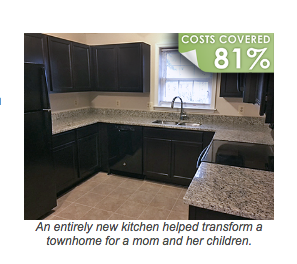
From the construction of entirely new shelter buildings to renovating sleeping areas, kitchens, and bathrooms, HomeAid Northern Virginia’s 116 projects have provided $14.7 million of construction to more than 40 nonprofit housing organizations that serve homeless families and children, victims of domestic abuse, runaway teens and other at risk individuals. Importantly, our projects have saved our nonprofit service-provider partners $8.4 million in retail construction costs, while at the same time enabling them to support improvements to provide a safe place for children to do their homework, for parents to get ready for work, and for families to get back on their feet. Instead of dollars spent on construction, our partners can pour more funding into the programs and services – education, vocational training, day care, counseling, etc. – that help individuals and families rebuild their lives.
HANV kitchen transformation
Several of our projects and partners include:

  • Shelter House’s Artemis House, Fairfax County’s only 24-hour domestic violence shelter. With HomeAid’s renovation, the shelter now provides safe housing for up to 8 individuals at a time facing life-threatening crisis.
  • Youth for Tomorrow (YFT), a residential campus for at-risk youth in Bristow, Va. HomeAid completed construction of two new homes on the campus, each allowing YFT to provide shelter and support services to 36 girls who are pregnant, young mothers, homeless, runaways, or survivors of sex trafficking.
  • Loudoun Transitional Housing Program. The program’s eight apartment units that provide transitional housing for homeless families and single women were completely renovated to create a well-appointed and fully-furnished home to help residents rebuild their lives and get back on the road to self-sufficiency.
  • Northern Virginia Family Service. HomeAid expanded and updated its shelter and food distribution center, constructed space for a Head Start day care facility, and renovated housing provided for disabled veterans and homeless families.

Beyond the Brick and Mortar: Enabling a Virtuous Cycle
Beyond the individual benefits to those living in the new/renovated facilities, there is a virtuous cycle of good associated with each HANV project:

  • Upgrades to housing positively impact not only current residents, but future residents for years to come.
  • Enhanced real-estate improves the balance sheet for nonprofits, and improves neighborhoods.

In this way, our projects are not “done” when they are completed; their impact is felt across individuals and communities long-term. By strategically building what is needed most in Northern Virginia, HomeAid is able to support other nonprofits as we work together toward ending homelessness, one person and one family at a time.

brain foundation renovation image 1HomeAid Isn’t Just For Homebuilders: “Helping Hands”
While we are always recruiting new homebuilders to serve as project “builder captains” and construction trade partners to collaborate with on our projects, we have plenty of other volunteer opportunities as well. The homes and shelter facilities we build and renovate provide comfortable shelter, but that’s typically not all that incoming residents need. Many arrive with little more than the shirts on their back. We started our Helping Hands program to make sure that individuals and families who move into HomeAid-renovated housing have what they need for a fresh start:

  • Our Fill the Fridge program collects gift cards so that homeless families moving into a new home can buy milk, fruit, and other perishables for a healthy start in their new home.
  • Our Welcome Home Baskets include basic but essential items that formerly-homeless families need for their new home, including towels, sheets, pots, dishes etc.
  • Our annual backpack drive ensures that children living in homeless shelters and supportive housing properties have access to a new backpack before the start of each school year; and our annual “Night at the Ballpark” treats hundreds of families living in local shelters to a Potomac Nationals baseball game – quality family time at a sporting event that may otherwise be out of financial reach.

Scout groups, neighborhood groups, school groups, church groups and other community organizations have organized collection drives for our Helping Hands program. These drives help make a house a home and you can make a difference by organizing one for an upcoming project. Learn more at http://www.homeaidnova.org/get-involved/volunteer/.