by Carolyn Landes, Communications Manager, Georgetown Ministry Center
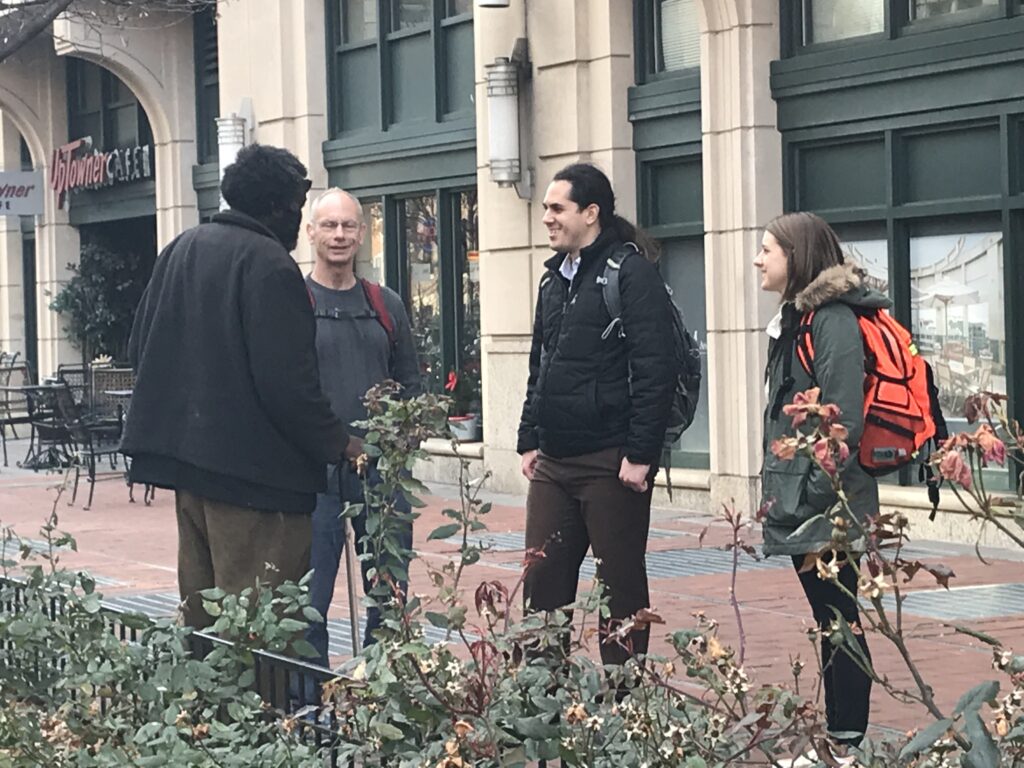 On a chilly afternoon this past December, I accompanied GMC Executive Director, Gunther Stern, and GMC Consultant Psychiatrist, Dr. John Tarim on street outreach (a program where GMC staff check on and visit with individuals experiencing homelessness outside of the Center, directly on the streets). We’d been walking for about an hour and as we made our way down a street in West End, Gunther called out a greeting to an approaching figure — a large man, well over 6 feet tall and of a stocky build, walking with a cane. To protect his privacy, we’ll call him Ed.
It was clear from Ed’s warm reception of Gunther that he was a familiar acquaintance. Despite his physically imposing frame, Ed was mild-mannered, polite and soft-spoken. Gunther and Dr. Tarim asked the usual outreach questions, inquiring about Ed’s health and well being and asking if he needed any of the supplies we were carrying with us — items like granola bars, hand warmers, hand sanitizer and socks.
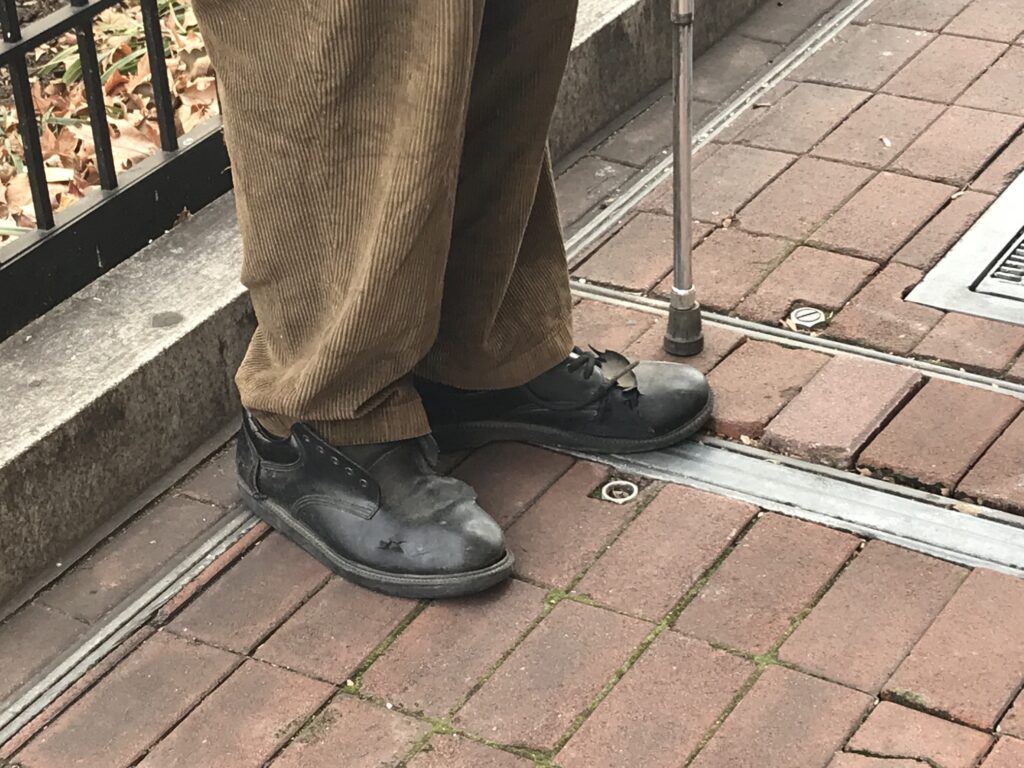 I happened to glance down toward Ed’s feet at the same moment Gunther asked, “How are your shoes holding up?” It was a gentle but pointed inquiry. The answer was obvious to all of us without Ed saying anything. His black, leather shoes were well beyond the point of “holding up” — they were literally falling apart. Only his left shoe had a shoelace. Threads were coming out of the seams on both soles and there were large gaping cracks in the leather on both shoes. The hole on the top of his left shoe was so large that I wondered how it was staying on his foot, let alone providing any protection from the cold.
Ed demurred the question at first but Gunther calmly persisted.”We’ll get you some shoes. What size are you?”
“Thirteen,” Ed allowed.
“Thirteen? Are you sure?”
Ed nodded. And then softly added, “Only if there’s extra.”
At that moment, I had to turn away. A large lump had formed suddenly in my throat and hot tears were stinging the corners of my eyes. Although I’d been working at GMC for 9 months by this time and had witnessed guests experiencing homelessness in dire situations before, something about the image of Ed’s tattered shoes struck me. I felt a mix of compassion for this gentle soul – how long had he been wearing these shoes that were disintegrating on his feet? – and anger that I wasn’t sure where to direct. How were we – as a society, as fellow human beings — allowing this? The holes in Ed’s shoes didn’t form overnight. How many others had passed him, noticed his broken shoes, and just kept walking, ignoring his obvious need?
Our interaction with Ed was just one of many we had that afternoon. Walking for just a few hours, we were met with individual after individual — both men and women, of varying ages, backgrounds and dispositions — each with their own story. They all recognized Gunther and knew immediately why he and Dr. Tarim were there — to offer help, even if only on that day in the form of a plastic baggie filled with toiletries, snacks and socks.
The image of Ed and his broken shoes stayed with me and a couple of weeks after our encounter I inquired with Gunther about him. “Whatever happened with the guy we saw on outreach that needed the shoes?”
“Oh! He got them.”
I blinked. “He got them?”
Gunther nodded. “Yeah, I went home that night and told Alexis to pick some up in his size. She was already out shopping for the kids.”
I smiled incredulously. “And did you already get them to him?”
Gunther nodded. “I went by Miriam’s the next day.”
I don’t know how Gunther knew Ed would be at Miriam’s Kitchen, a neighboring non-profit that aids those experiencing homelessness, the next day. It was one of the many small enigmas I was perplexed by working with someone who had been doing their job for nearly 30 years — I guess, like in most jobs, some things are learned with experience.
I do know that my experience on outreach that day cemented in my mind as an absolute surety the dire need our community has for organizations like GMC. It is our responsibility to recognize the needs of our neighbors and to help those who cannot help themselves.
Georgetown Ministry Center is a year-round drop-in center, providing psychiatric and medical outreach, social and mental health services, case management, shelter and housing support, handicapped-accessible bathrooms, and laundry facilities to one of the very neediest populations: chronically homeless individuals who suffer from mental illness, substance abuse, and developmental disabilities, as well as physical injuries. Many are resistant to help, so GMC creates a welcoming environment that fosters trust. Last year it reached nearly 1,000 homeless individuals, including 60-70 “regulars.” An on-staff psychiatrist served 100, while a general practitioner provided care to 350. Moving from the streets to housing is profoundly challenging for this population, but for those who achieve it each year, GMC supports them at each step.
 Founded in 1978,
  Did you know that one in three teens in the United States experiences dating violence
 February is Teen Dating Violence Awareness Month. “Teen DV Month (sometimes called TDVAM) is a national effort to raise awareness about abuse in teen and 20-something relationships and promote programs that prevent it,” writes
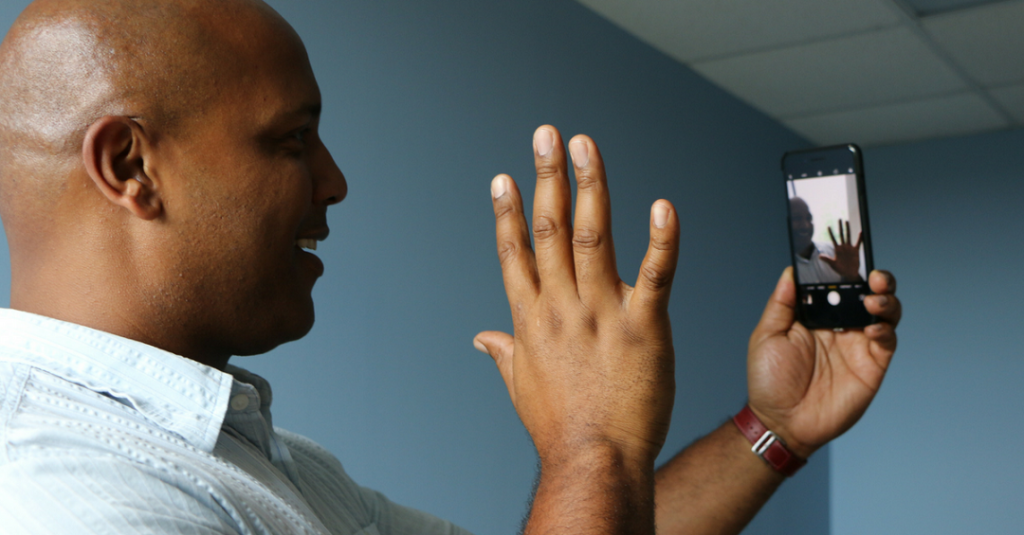 Step 3: Post your selfie and tag 5 friends to join you to multiply your impact!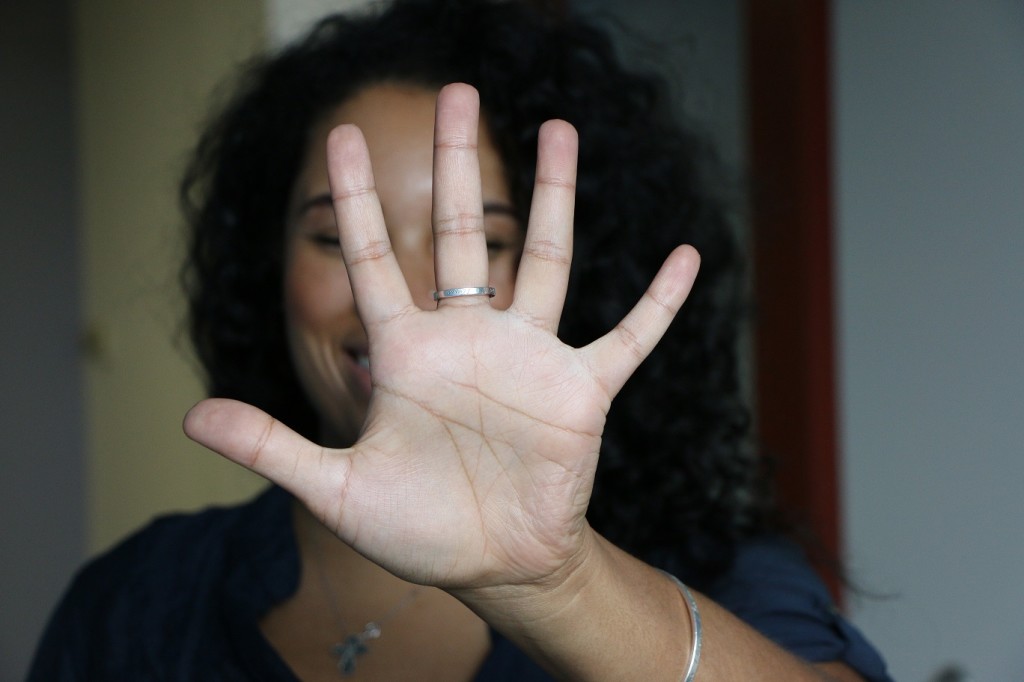


 Traveling Players Ensemble puts the “camp” back in “summer camp.” Our no-phone policy allows performers to learn high-level language skills, teamwork, camaraderie, and problem solving skills, all while creating lifelong friendships and a deep love and stewardship of the great outdoors. Our teaching artists return yearly to help our kids create theater and watch them grow as artists and people over the summer, and then from year to year as so many campers return to Traveling Players again and again!
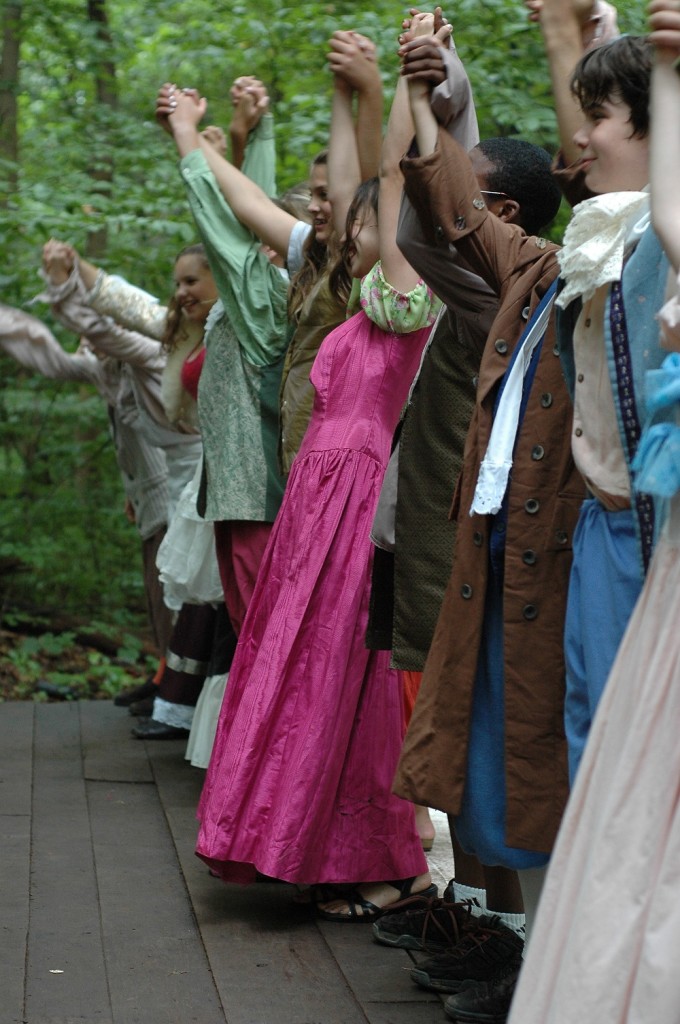 We may not be preparing for the arrival of the Queen and her elves, but we are a resilient community of performers, teaching artists, staff, and families. Our community responded to the flood with a brigade of volunteers who laundered and salvaged costume pieces. Alums and staff rolled up their sleeves to excavate the storage space with no heat and no bathrooms. Families, alumni, and friends banded together to donate more than $6,000 in a week.

 The Community Bridges Mentoring Program connects positive female role models with diverse high school girls for an impactful mentoring experience.
  Below, read the story of Community Bridges mentor Margo and her mentee Etsube to find out why mentoring matters to them.
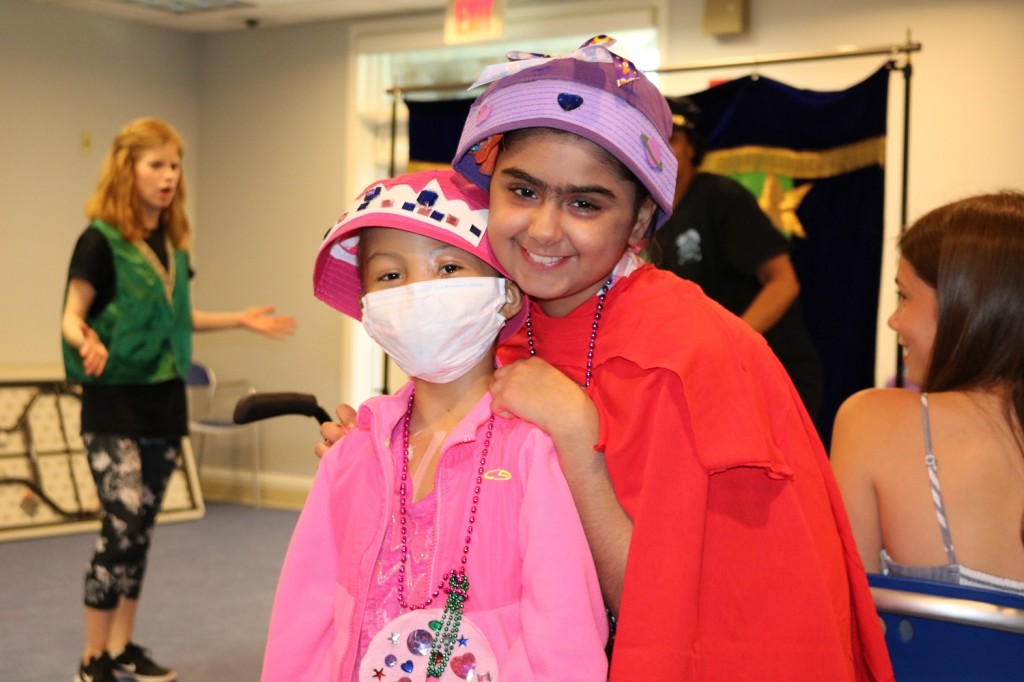
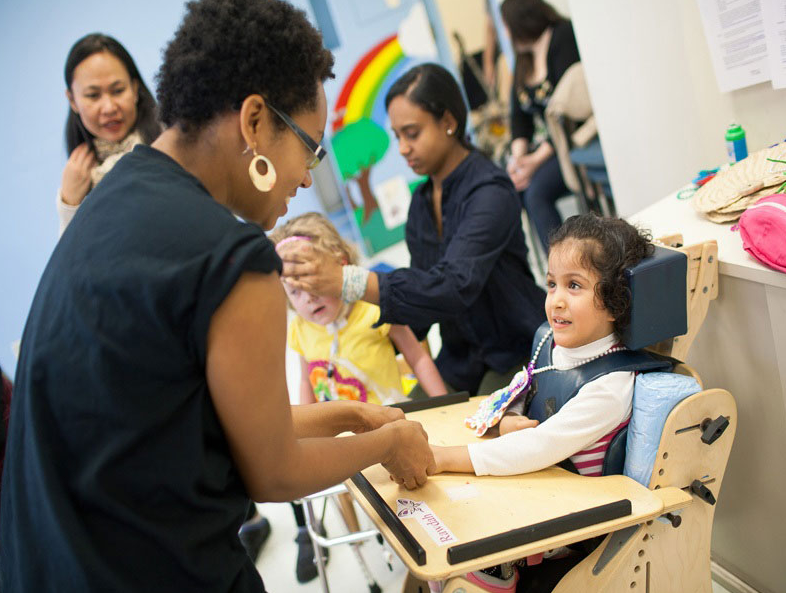 Only Make Believe (OMB),established in 1999 in New York City, is a nonprofit organization that creates and performs interactive theater for chronically ill and disabled children in hospitals and care facilities.
 OMB applied to the Catalogue
  The DC staff has received invitations to professional development workshops, organizational assessment of office functionality, online tools and cultural insights since our acceptance in the Catalogue. The support of the Catalogue staff has been immeasurable and the visibility that is provided with acceptance has been awesome.
 OMB would certainly still apply, but we would be more mindful about how Only Make Believe can add to the collective of wonderful nonprofit organizations that comprise the Catalogue for Philanthropy. With every partnership there is give and take; OMB strives to ensure that we give just as much to support the mission of the Catalogue and our fellow nonprofit partners as they freely give to Only Make Believe.
 Immigration. Gentrification. Environmental issues. Teen mental health. Where will the next big idea originate? They can’t yet vote. They are years from becoming credentialed doctors, lawyers, and teachers. They may compete for jobs that have not yet been invented. But today they can begin as changemakers. In a moment when adults often feel powerless – overwhelmed by daunting social, environmental, and political challenges – how can we set a different tone for our young people? How do we challenge them to empathize, innovate, and persist when others say it can’t be done? How do we remind them that social change begins with them?
 The LearnServe Innovator’s Coffee House is an opportunity to witness the start of our students’ social venture projects, meet the LearnServe community, and promote youth-led social innovation in the DC area.