Skip to main navigation

Catalogue Blog

Making a Difference with CASA of Prince George’s County

We make a real difference in the lives of foster children
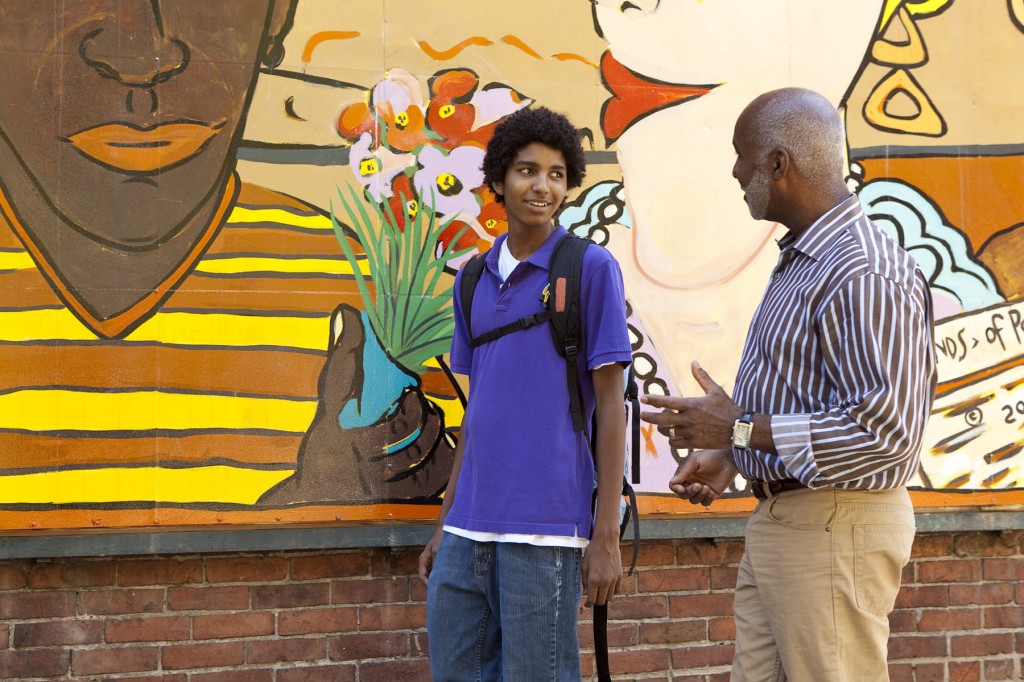
male volunteer and teen

Every month is mentoring month at Court Appointed Special Advocate (CASA)/Prince George’s County, a nonprofit in its 16th year that recruits, trains and supervises CASAs for foster children.

CASAs are volunteers sworn-in by a judge to investigate a foster child’s needs and challenges – from academics to emotional well-being – and then report back their findings and recommendations.

Besides being an advocate, a CASA is a mentor. They are there to talk to the youth about whatever they want to discuss, take them on field trips – such as to a ballgame or an amusement park – and explain to them the importance of becoming a responsible adult.

Studies show that a foster child with a CASA is far more likely to thrive.
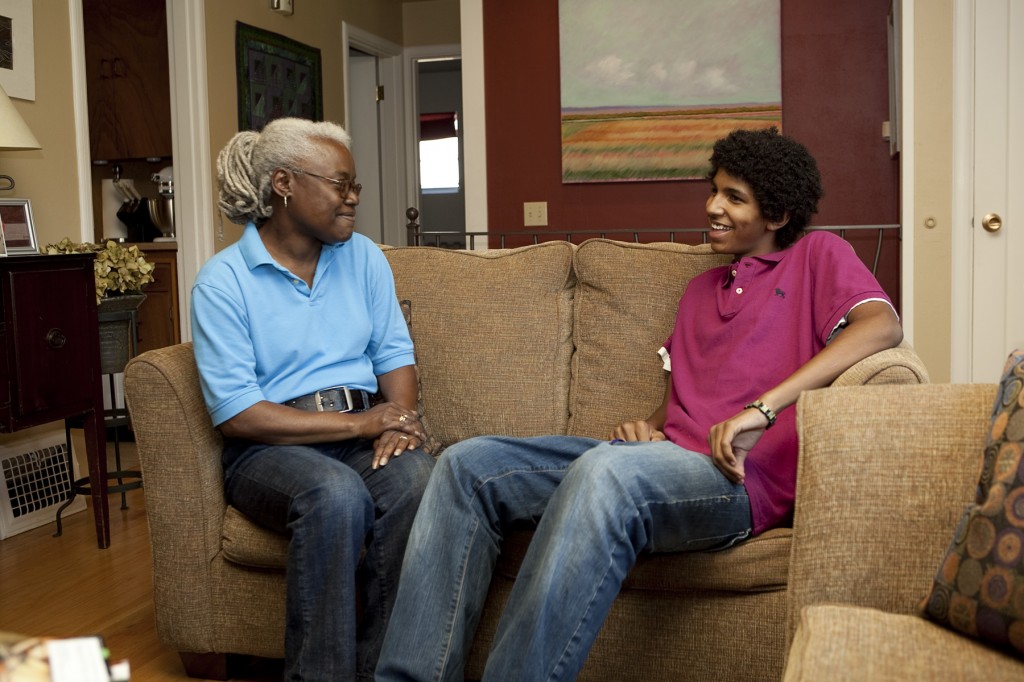
kid and adult living roomConsider this: More than half of foster children nationwide drop out of high school, increasing the chances that they will slip into poverty, homelessness and possibly even jail.

Yet upwards of 70 percent of foster children who have been assigned to one of our CASAs graduate, increasing the chances that they will enjoy a full and productive life.

We are proud to say that we make a real difference. We would like to do even more. Our goal is to have one CASA with each foster child. We now have only about 150 volunteers in a county with more than 400 foster children.

Help us celebrate National Mentoring Month by helping us help more foster kids.

#National MentoringMonth (3)

Please keep in mind that these boys and girls are at risk at no fault of their own. They simply were born to parents who, for whatever reason, were unable to care for them. Help us help them!

For more information, please contact CASA/Prince George’s County at 301-209-0491 or email kbundy@pgcasa.org.

APA Heritage Month and Low-Income Community Members

aaleadEDToday’s blog post was written by Surjeet Ahluwalia, Executive Director of Asian American LEAD, a youth development organization serving low-income and underserved Asian Pacific American youth.

May was Asian Pacific American (APA) Heritage Month. APA Heritage Month began as a week of commemoration in 1978 and became a full month in 1990. For close to 40 years we have been increasing the awareness of the APA community by celebrating the contributions of APAs in America, but this has not translated into increased awareness of the challenges low-income Asian Pacific Americans face in our country today. The model minority myth that Asian Americans are all wealthy, highly educated, and won’t advocate for themselves still dominates.

SAMSUNG CSCAt Asian American LEAD (AALEAD), we serve youth who don’t fit within the model minority myth. For instance, Mei begins her day in her 1 bedroom apartment at Museum Square in Chinatown, DC, which she shares with her brother and father. They have received misinformation many times from their landlord that they have to leave their home. Their father has often shared his concerns about what’s happening in their building with community members, but the constant pushing is taxing on him. Mei and her brother don’t want to have to switch high schools. They want to stay in their home, but also to have a peaceful living situation. After hard days at home and at school, Mei and her brother head over to afterschool programs with AALEAD.

Asian American LEAD is a place where youth find their second home with people who welcome them and can relate to their struggles. AALEAD’s programming focuses on educational empowerment, identity development, and leadership opportunities for low-income APA youth. Youth like Mei are supported with tools to pursue their educational goals when their parents are not able to put time toward this, and supported to feel proud of themselves and where they come from. With this confidence and the opportunities AALEAD provides, youth have the tools to become leaders across communities.

We need safe spaces for youth of all backgrounds to grow. AALEAD is the only space in the DMV specifically for low-income Asian Pacific American youth. As you commemorate the APA community, we ask you to remember not only past contributions of Asian Pacific Americans, but also provide support to low-income APAs in your community today.

To find out how you can support the work of AALEAD, view their wishlist on our website, or visit AALEAD.org.

Make A Local Difference For Healthy & Strong Girls

This following post was written by the Greater Washington Girls on the Run councils (comprising of DC, Northern Virginia, and Montgomery County councils). The Catalogue for Philanthropy is proud to feature the GOTR councils for our first collaborative fundraising campaign on April 7th!

gotrcampaign

Girls on the Run (GOTR) is an empowerment program for girls in 3rd-8th grade – giving each participant the skills and experiences she needs to navigate her world confidently and to unleash her limitless potential! We teach girls life skills through a curriculum of engaging lessons and fun running activities. At each season’s conclusion, the girls complete a celebratory 5K run that gives them a lifelong memory of accomplishment.

The result? Healthy, Confident girls who Can!

The GOTR program unifies girls around the region. It teaches them to embrace differences and find strength in connectedness, creating a common bond across all socioeconomic lines. The Greater Washington Girls on the Run councils provided $502,237 in program scholarships in 2014-2015 to girls with financial need. Financial support can make a difference in the lives of young girls throughout the region by providing critical resources or influence for more girls to learn valuable life lessons and know their limitless potential!

And, it works! To ensure program quality and efficacy, all of the councils in the Greater Washington area participate in a national survey of our program. The study is designed to determine the impact of program participation on girls’ confidence, competence, connection, character, caring, contribution, and physical activity/inactivity. Since Girls on the Run is a physical activity-based youth development program, we also assess pre- to post-season change in physical activity and sedentary behavior. Findings provide evidence that Girls on the Run is having a positive impact on youth development, particularly for girls who need the program the most.

Our impact on girls speaks to the quality of our curriculum, and the support of our volunteers. Like many youth development programs, GOTR believes in the power of mentorship. We believe in it so strongly that it is part of our program model. Each team of girls is led by a female Head Coach who creates a safe space that supports girls’ growth and development. This Coach, along with her Assistant Coaches contribute to this powerful and unique environment, together modeling healthy and supportive relationships. During the 2014-2015 program year, 2,685 people volunteered to be a coach and a mentor to the girls in our program throughout the region.

The Girls on the Run councils of the Greater Washington Area are partnering with the Catalogue for Philanthropy to host a one-day giving campaign on Thursday, April 7th. You can help us raise enough funds by giving 90 more girls the opportunity to be healthy, strong, and confident!

Domestic Violence Awareness Month: Guest Blog from Shirley Clark, Executive Director of the Women’s Center

This week we welcome Shirley Clark, Executive Director of the Women’s Center, to share her thoughts on the importance of looking beyond outcome measures when evaluating nonprofit performance. The Women’s Center works to improve significantly the psychological, career, financial and legal well being of women, men, couples and families, regardless of their ability to pay.
Continue reading

7 Questions with Adam Levner, Executive Director of Critical Exposure

AdamAs we wrap up blogs for Artist Awareness Month, we welcome Adam Levner, Executive Director of Critical Exposure to 7 Questions. Critical Exposure trains youth to use photography and advocacy to make real change in their schools and communities. Previously, Adam worked as a fifth grade teacher and then as a community organizer with Stand for Children, where he led successful reform efforts that resulted in over $20 million annually in additional revenue for Prince George’s County, MD school district.

    Continue reading

The Importance of Arts in Youth Empowerment

August is Artist Appreciation Month and we welcome Executive Director Nancy Schwalb from to speak about the important influence of artistic creativity on youth development and empowerment. The D.C. Creative Writing Workshop, based in the Congress Heights neighborhood of Southeast D.C., unites parents, teachers and professional writers-in-residence to transform the lives of youth through self-expression and the power of the written word.

Continue reading

Guest Post: Aspire Counseling

Mother’s Day is just around the corner and in that spirit, we welcome Aspire Counseling to the blog! Aspire Counseling is committed to meeting the mental health needs of all Montgomery County residents, regardless of income. Their programs reach out to patients at the most critical junctures in their lives: when they become parents, battle an illness, or face aging. In particular, their Healthy Mothers, Healthy Babies program offers in-home therapy to expecting and new mothers battling post partum depression. Read more about their program and how to get involved here:

When Mother’s Day is Not Happy

Sunday May 11th is Mother’s Day. If a mother, you may receive breakfast in bed, a homemade card, flowers or a text message from your college son with “Happy Mother’s Day!” And yes, mothering can be a “happy” experience. It can also be hard. Sleepless nights, tantrums, juggling schedules, laundry, negotiating, reminding, etc. are no fun and can make for, at times – an unhappy experience.

One in five women will experience an even darker side to motherhood: pre and/or postpartum depression (PPD). Low income women have triple the chance (45 – 55%) of developing PPD compared to women in middle and upper income families. Low income women are also most likely to be uninsured. Finding affordable mental health treatment is often impossible.

Aspire Counseling, a mental health non-profit organization based in Gaithersburg Maryland, runs Healthy Mothers, Healthy Babies, a community based program that provides free home based mental health therapy to low income, uninsured and under-insured pregnant women and new mothers with pre-natal and post -partum depression. Our bilingual therapists travel to the women’s homes — or wherever easiest for the mother (playground, community center). This way she does not need to find childcare, arrange transport, or leave the house which can be a completely daunting and overwhelming exercise if depressed.

Eighty five percent of the women we serve are foreign-born. Many come from countries where they would be considered “crazy” if depressed. Seventy percent have experienced physical or verbal trauma in their home country. The trauma is often horrific: repeated childhood sexual abuse, gang violence, physical abuse by parents or partners, and rape. These women have not bad choices. They have been dealt a difficult hand in life and want to rise above it — for themselves and their child.

For example, “Jane” was referred for help when she experienced symptoms of pain and paralysis after her baby’s birth and medical tests ruled out physical causes. Most of Jane’s family stayed in El Salvador when Jane came to the US. Her pregnancy was fraught with depression, bad thoughts, and remorse about having left her family behind. Jane’s feeling of paralysis spread. Her anxiety skyrocketed. Her marriage was at risk. After 13 therapy sessions, Jane’s pain and paralysis had almost entirely disappeared. She was able to use “positive self-talk” and relaxation techniques to decrease anxiety and increase her sense of control. Her marriage improved. Jane still grieves her separation from her family in Central America, but she has begun to go church, where she sees other mothers from El Salvador.

The program has been running for over twelve years and treats more than 100 low income uninsured women each year. Nancy Ebb, program founder, recalls the very first client, “She was so anxious she stayed awake all night holding her baby to make sure nothing bad happened. She, and the baby, were listless.” In 2013 the award winning program helped 111 women. One hundred of the 111 women were uninsured and would have had no source of mental health care were it not for Healthy Mothers, Healthy Babies.

Home visitation means therapists can make a real difference. Ninety percent of the women we serve through the program get better and learn tools to combat depression in the future. When a mother’s depression lifts, babies “wake up,” come alive to their surroundings, and begin to thrive. Effectively diagnosing and treating postpartum depression restores the mother-infant bond, and avoids cognitive, emotional and behavioral problems that can arise in children of depressed mothers. Mothers who are available to their babies read their signals, keep them nourished, and teach them to laugh, explore, and trust the world around them.

If you know a family member, friend, or neighbor with a new baby this Mother’s Day, take the opportunity to bring them a cooked meal, offer to run errands, or just let them know it is okay to feel tired, overwhelmed and unsure. If they need more help, are unable to sleep when the baby sleeps, continually crying and are listless, call Aspire Counseling Healthy Mothers, Healthy Babies program manager, America Caballero on (301) 978 9750.

For more information on Aspire Counseling’s Healthy Mothers, Healthy Babies program and other services, visit them online at: www.ccascounseling.org or check out their Catalogue page to get involved!

Guest Post: LearnServe International

On the eve of the 5th Annual LearnServe Venture Fair, we welcome Scott Rechler, CEO and Director of LearnServe International to GoodWorks! LearnServe International’s program prepares students in greater DC to be the next generation of global leaders and social entrepreneurs. Their Fellows Program brings together over 70 high school students from 30 public, private and charter schools to learn how to bring sustainable social change to their communities. Over an academic year, students design and launch their own social ventures — action projects to benefit their schools and communities — while learning core business entrepreneurship skills, including budgeting, strategic planning, and team-building.

Can you really teach social innovation?

by Scott Rechler, CEO & Director, LearnServe International


Could the next Jamila Larson, Mazi Mutafa, or Robert Egger be sitting in class right now in the District, Maryland, or Virginia?

Maybe.

In a March Washington Post article, J. D. Harrison opened his article titled “Can you really teach entrepreneurship?” with a similar question, but a different cast of characters: Steve Jobs. Mark Zuckerberg.

Toss in Bill Gates, and you’ve got the three examples of entrepreneurs referenced by every high school group I speak with. And for good reason. All three have built successful companies whose products shape our daily lives, and a personal brand that complements their corporate identities.

Ask a room full of high school students for examples of social entrepreneurs? Uncomfortable silence.

We are surrounded by powerful examples of social entrepreneurs here in the DC region. But they’re not (yet) household names — unless you happen to spend time with their organizations.

Take for example Jamila Larson, founder of the Homeless Children’s Playtime Project, which brings much-needed recreation to kids living in shelters. Or Mazi Mutafa, founder of Words Beats & Life, giving young people a voice through hip-hop. Or Robert Egger, founder of DC Central Kitchen — and of C Forward, an initiative to raise the profile of the non-profit sector nation-wide.

The next Steve Jobs or Mark Zuckerberg may well be sitting in a DC classroom today, preparing to launch the next breakthrough technology or scalable business. And sitting right next to her is the next Jamila, Mazi, and Robert.

LearnServe is committed to inspiring and training the rising generation of social entrepreneurs. These are the young people who know they want to do something good in the world — but may not yet know what or how. We help them blend this passion with the tenacity, vision, and technical skills essential to entrepreneurship in order to transform the lives of their classmates, neighbors, and communities.

Tricia Granata, executive director of the Network for Teaching Entrepreneurship in DC, reflected in Harrison’s article on the “innate entrepreneurial spirit” of young people, and the importance of helping them develop the accompanying technical skills.

LearnServe offers an outlet for our students to channel this innate entrepreneurial spirit and build those technical skills — coupled with a powerful dose of empathy and social insight.

LearnServe alumni have gone on to launch companies introducing fair trade coffee to China, and improving hygiene in India through the sale of sustainable soaps in the U.S. They have created lasting organizations teaching foreign languages to elementary school students, and science to middle schoolers. Yasmine Arrington, a LearnServe and DCPS alum and founder of ScholarCHIPS, was awarded the Washington Women of Excellence Award for Community Service earlier this month for her work raising college scholarship funds for children of incarcerated parents.

Tomorrow, 70 more young social entrepreneurs will “pitch” their social venture plans to a panel of business and community leaders at LearnServe’s 5th Annual Venture Fair and top projects will receive seed funding to help get their ideas off the ground. We invite you to join in celebrating their creative spirit and vision for our community. These are our region’s rising generation of social innovators.

Harrison concludes his article with a quote from Wendy E. F. Torrance, director of entrepreneurship at the Kauffman Foundation: “No matter what career they choose, it’s important for young people to look at the world through the lens of an entrepreneur.”

We couldn’t agree more — and we are working to ensure that lens is wide enough and community-oriented enough to include Jamila, Mazi, Robert and Yasmine, alongside Steve Jobs and Mark Zuckerberg.

To learn more about LearnServe International and their Fellows Program, visit them online at: www.learn-serve.org. Meet the Fellows at the 5th Annual Venture Fair tomorrow (4/24) or get involved here!

Getting to Know the Catalogue Review Team: Part 3

Today marks the 3rd and final installment of our “Getting to Know the Reviewers” blog series. We’re excited to introduce our readers to Hedrick Belin, President of the Potomac Conservancy (a Catalogue charity) and 4-time Catalogue reviewer. Approximately one-quarter of our review team is comprised of members from peer nonprofits. Between these reviewers, members from foundations, corporate giving programs, other partner organizations and philanthropists, the Catalogue team is always confident in the work of this group to help us determine which small charities are truly “the very best” in Greater Washington.

What do you enjoy most about reviewing nonprofits for the Catalogue?

Hedrick Belin, Potomac Conservancy: It lets me see what other innovative conservation groups are undertaking to clean our air, safeguard our drinking water supply and protect wildlife. There are many amazing groups making a real difference in our overall quality of life with very few financial resources. Every spring, I come away re-energized after spending a weekend reading through a dozen applications.

What is one piece of advice you would give to future Catalogue applicants?

Hedrick: Specifics matter. Assume the reviewer does not know anything about your organization. What can you put in your application that shows the concrete impacts and on-the-ground differences that your organization is making? Quantify by including lots of metrics to demonstrate you are not just a nice organization doing nice things, but are really filling a community need and making a difference when it comes to changing lives or improving the community. Make it easy for me to recognize immediately that you are one of the best.

What is one piece of advice you would give to new/future Catalogue reviewers?

Hedrick: Come with an open mind, but a critical eye. The Catalogue is supposed to represent the best small non-profits in Washington, DC, not every small non-profit. You should be open to innovative approaches to solving some of the chronic problems in the region, but also read the applications carefully to see which groups have the best return on investment.

How has being a reviewer had an impact on your views of philanthropy in Greater Washington?

Hedrick: The region is blessed with an incredibly strong non-profit sector that is getting stronger every year. I’m constantly impressed with the passionate individuals fighting every day on the front lines to build a more just and sustainable world and have seen the power of this sector to change lives and save lives. The larger non-profits that have been around for decades tend to get the press, but the non-profits that the Catalogue selects deserve to be recognized as well for the tremendous difference they are making in our local communities.

What do you feel your unique background brings to the Catalogue review process?

Hedrick: As an Executive Director, I quickly assess organizational alignment. Do the organizational mission, vision and strategies tie together in a concise, compelling way? Is there a clear theory of change that the organization is employing to drive every decision?As a former consultant working with over 100 social purpose organizations across the non-profit spectrum, I’ve developed an ability to evaluate the entities’ efficacy and impact by looking at a few key answers in the application. For example, I look at the size and composition of the board. I also look at revenue streams, both in terms of diversity of sources and also if they have the revenue engine to drive the short and long-term goals listed in question.

To learn more about Potomac Conservancy and find out how you can donate or volunteer, head over to their Catalogue web page, or connect with them on their website, Facebook and Twitter pages.

Getting to Know the Catalogue Review Team: Part II

Welcome to week two of our “Getting to Know the Catalogue Review Team” series, where we invite you to get to know the members of our community who help us determine which small charities are the very best in Greater Washington. Part one can be found here.

This week we’re featuring Sandra Hoehne, ‎a 2-time reviewer and Catalogue supporter, and Maegan Scott, Program and Communications Officer at Meyer Foundation. This year marks Maegan’s 3rd as a Catalogue reviewer.

How did you hear about the Catalogue? And, how did you become a reviewer?

Sandra Hoehne, Catalogue supporter: I cannot remember how I found out about the Catalogue. Around ’09 or ’10 I was planning our yearly giving. Like many people, I give at the end of the year so that I know exactly how much we can afford to give. I found the Catalogue’s Donate Now / Decide Later option and was hooked. Also, my husband and I live and work in Arlington and so many of my favorite local non-profits have been featured in the Catalogue.

As to reviewing – after meeting Barbara and Nancy and being infected by their enthusiasm and energy, I knew that I wanted to do whatever I could to help them. Donating money was one way, but getting my hands dirty with the reviewing process was the next step.

Maegan Scott, The Meyer Foundation: The Meyer Foundation has been a long-time supporter and partner of the Catalogue, and was one of the funders that helped to bring the publication to DC in 2003. Meyer staff has served as reviewers each year since the Catalogue launched in the Washington region. I was honored to become part of that tradition three years ago.

What do you enjoy most about reviewing nonprofits for the Catalogue?

Sandra: I enjoy seeing that though the need in the DC area is so great in all areas that the Catalogue covers, the drive to help is just as strong and lack of resources does not discourage dedicated people.

Maegan: There are actually two things. I love being introduced to organizations that haven’t or may never apply to Meyer for funding. I feel like it gives me a much more comprehensive understanding of the great work taking place across the region. I use that information in a lot of different ways, for example connecting friends to organizations they may fall in love with or even to pursue volunteer opportunities myself. I also just love the Catalogue’s mission and the emphasis it places on storytelling. I know that the organizations that are selected to be Catalogue nonprofits are going to get excellent visibility and coaching and become part of a network that will help increase their overall effectiveness.

What is one piece of advice you would give to future Catalogue applicants?

Sandra: Be succinct. And, maybe don’t include the resume of each Board Member in your application.

Maegan: Remember that this application will be read by a real live human being. I think so many groups are used to producing proposals and reports that are highly structured (especially groups with government grants and contracts) that they hesitate to tell their organization’s story beyond numbers and metrics. Of course, numbers and metrics are important, but don’t lose the passion and enthusiasm that brought you to the work in the first place. I want to read about it!

What is one piece of advice you would give to new/future Catalogue reviewers?

Sandra: Clear your schedule for a day to do this. It is more taxing emotionally than you would think and you will need a little recovery time.

Maegan: Give yourself plenty of time and look at everything, including websites. Spend just as much time with the organizations you’re familiar with as you do with the groups that are new to you. Be honest in the comments; constructive feedback is sometimes more useful than glowing praise.

Given your experience as a reviewer, when you see a nonprofit with the Catalogue’s “seal of approval” what does that mean to you?

Maegan: I love seeing the Catalogue seal! I think it’s such a powerful branding tool. When I see the seal, I know that this is a well-managed organization doing meaningful and impactful work and that it survived a thorough financial review by RAFFA. And because not all Catalogue nonprofits use the seal, I also know that this organization cares about leveraging and maximizing its inclusion in the Catalogue.

How has being a reviewer had an impact on your views of philanthropy in Greater Washington?

Sandra: It has really educated me on how much work nonprofits do, in addition to their primary purpose, to handle the very rigorous scrutiny to which something like the Catalogue subjects them. Having good intentions, identifying a need, and addressing it seem to me only a part of the equation. I have new respect for nonprofits that make it through these vetting procedures and are able to sell themselves and prove their worthiness. They not only have to accomplish their stated goal, but the organization itself and the administration have to be exemplary.

What do you feel your unique background brings to the Catalogue review process?

Sandra: I have been involved in small businesses my entire career. I find myself reading every application as if it were a business plan and the investment being sought is placement in the Catalogue. I wonder what kind of returns can be expected and how quickly. Since space in the Catalogue is limited, I only want the organizations that seem most poised to leverage that “investment” to have access to it.

Maegan: Even before working at the Meyer Foundation, a lot of the work I did focused on systems-building — who and what need to be in place to get the job done. Since joining the Foundation, I have seen and learned SO much about what works and what doesn’t work in how nonprofits are built (especially in terms of finance, boards, and executive leadership) and my belief that solid infrastructure matters if we’re going to see the social change that we’re all working to create has deepened exponentially. So a lot of what I bring to the review process is that — I’m assessing the organization’s capacity (including its potential) to advance its mission, I’m asking how well are the internal gears working.

When reading applications, have there been any “industry trends” (i.e. program design, donor engagement, ways of measuring impact, etc.) you have noticed since becoming a reviewer? Or, what trends in the nonprofit sector have caught your attention in the past year?

Maegan: I’m partially biased because of my role at the Meyer Foundation, but increasingly I’ve noticed organizations using social media as a way to strategically engage all of their stakeholders and not just the rote “thank you” tweet or Facebook post to a foundation or donor as a way of acknowledging a gift. We’re seeing more active engagement with clients and volunteers, and assertive program messaging and advocacy.

I’ve also seen more comprehensive and creative ways of talking about sustainability. Beyond secure and diverse funding streams, nonprofits applying both to Meyer and the Catalogue are writing about infrastructure and investing in talent and talent pipelines.

Stay tuned next week when we hear from Hedrick Belin, Catalogue reviewer and President of Potomac Conservancy!